

Ivory Coast
Country Overview
| French translation available |
The northern regions of Côte d’Ivoire, Ghana, Togo, and Benin are increasingly shaped by regional dynamics stemming from the political, security, and humanitarian crisis in the Sahel, which originated in northern Mali in 2012 and subsequently expanded into western Niger and Burkina Faso. In Côte d’Ivoire, fragile security conditions in neighbouring border areas, together with population movements, have contributed to increased cross-border displacement, particularly from Burkina Faso since 2021. The number of asylum seekers has risen significantly, with most of them hosted in the northern regions of Tchologo and Bounkani, where pressure on basic services and local resources has increased. The country also continues to face recurrent humanitarian pressures, including epidemic outbreaks affecting vulnerable communities.
In this context, IMPACT has been strengthening humanitarian information systems across the Coastal Countries through capacity-building and training activities aimed at improving the quality and use of data for decision-making. These training activities focus on assessment design, data collection and analysis, and data visualization, supporting national and humanitarian actors to better understand evolving needs and improve response planning. Through its REACH initiative, IMPACT also supports humanitarian situation monitoring in Côte d’Ivoire, generating evidence on population movements, living conditions, and the needs of displaced populations to inform targeted responses.
Research Highlights
| Humanitarian Interventions and Needs in Northern Côte d’Ivoire – Storymap January 2026 This 5W (Who does What, Where, When and for Whom?) dashboard for northern Côte d’Ivoire brings together information on humanitarian interventions carried out across the Denguélé, Savanes and Zanzan districts, providing a clear, up-to-date and comprehensive overview of activities implemented by different actors. | 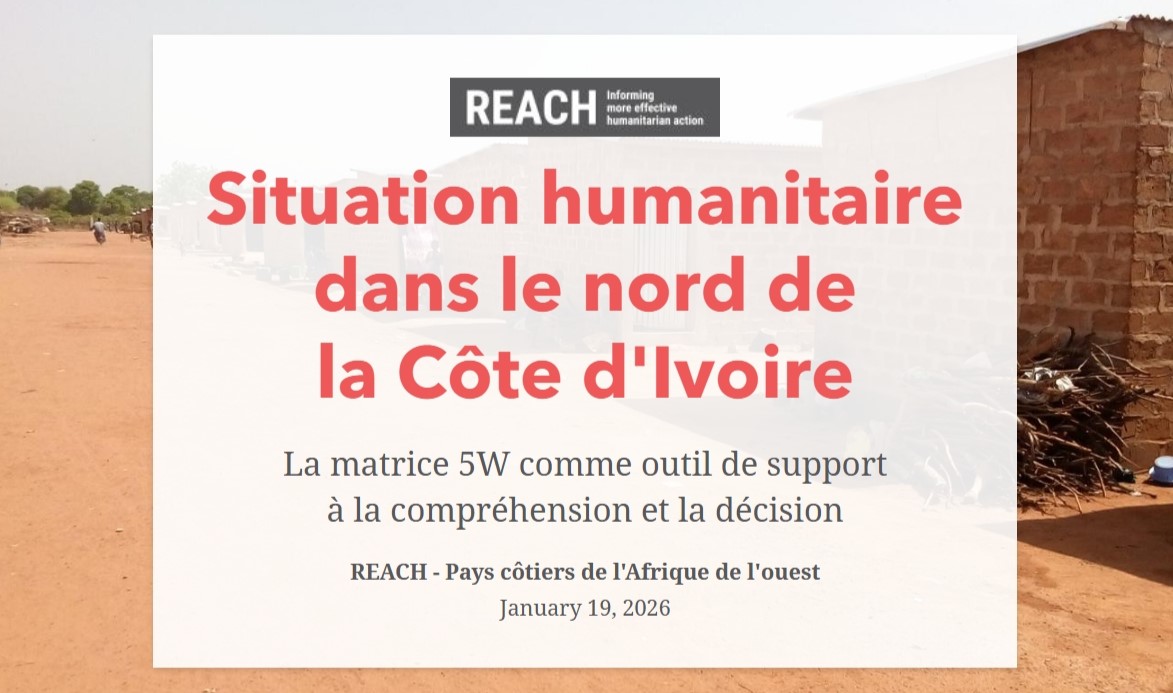 | |
| Humanitarian Response in Côte d’Ivoire – Dashboard December 2025 | 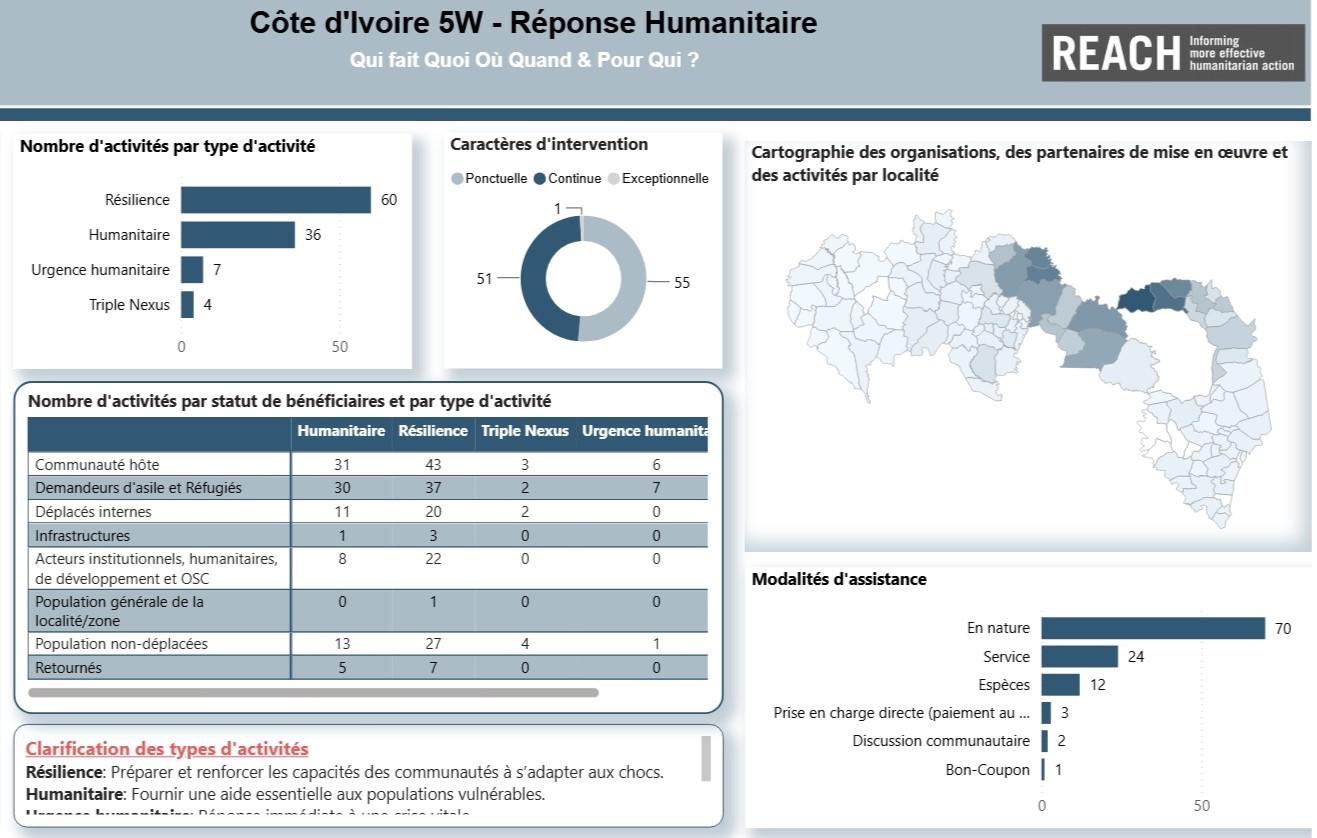 |