

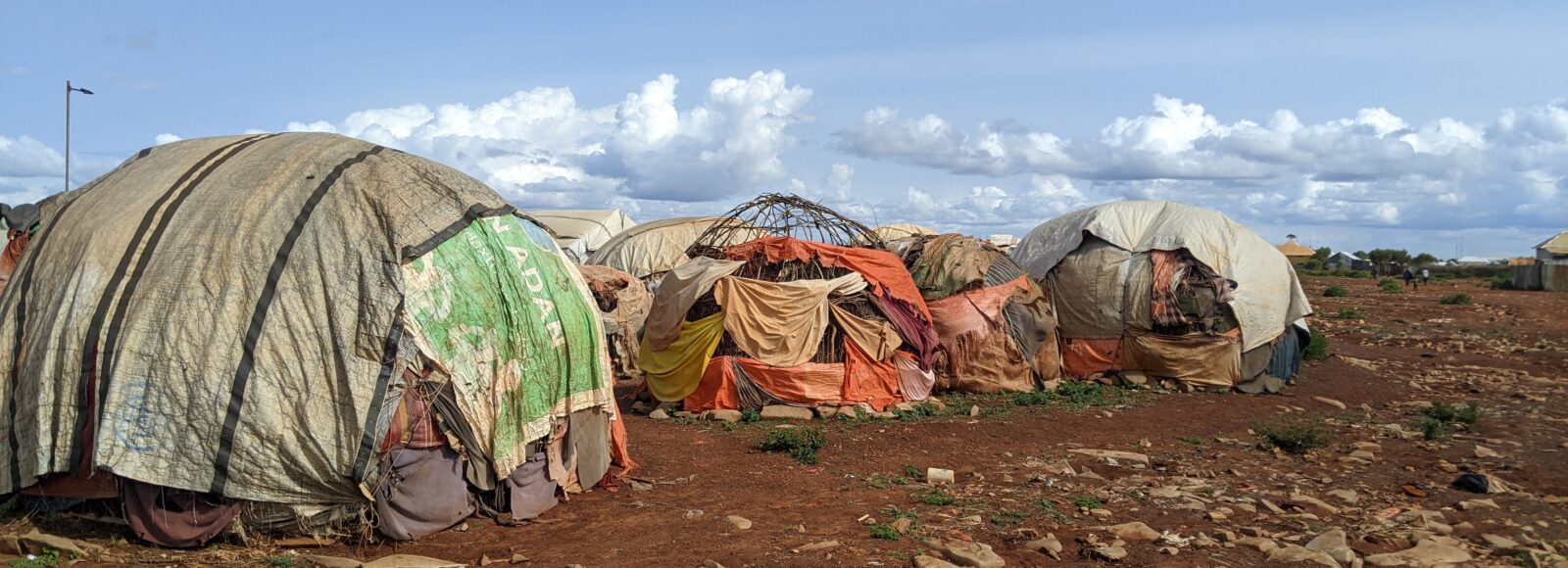

Somalia is facing a prolonged displacement crisis, driven by recurring conflict, climate shocks, and persistent gaps in essential services, land security, and sustainable livelihoods. In Baidoa, the capital of the Bay region and interim capital of Southwest State, these overlapping challenges have created a severe displacement situation, prompting a scale-up of humanitarian response.
| 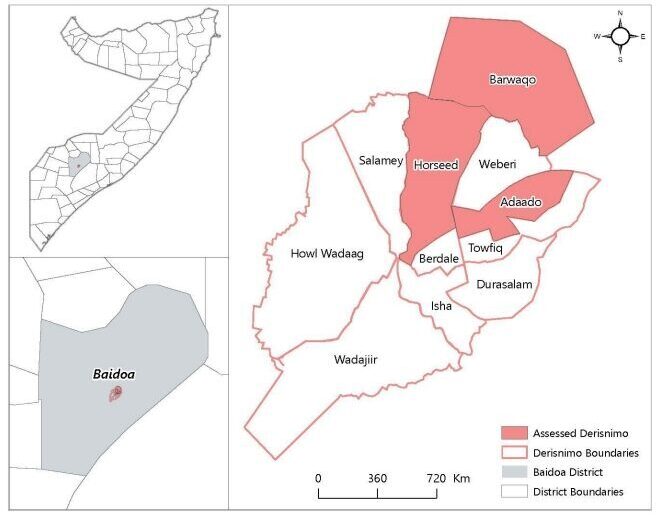 |
In response to this crisis, REACH, in coordination with the National Centre for Rural Development and Durable Solutions (NCRDDS), implemented an Area-Based Durable Solutions Assessment. This project seeks to understand how IDPs and host communities in Baidoa experience displacement, and what they identify as priority needs. By amplifying community voices, the assessment provides actionable insights that strengthen evidence-based planning and coordination-shaping programmes, guiding policy, and driving durable solutions at the local level.
Conducted in close collaboration with stakeholders including IOM, NRC, GREDO, JIPS, the CCCM Cluster, and the Danwadaag Consortium, the assessment ensured both local ownership and operational relevance.
Key Findings
Displacement in Baidoa is driven primarily by conflict and climate-related factors. Protracted insecurity, recurring droughts, and floods continue to trigger both new and secondary displacements, while male migration for work and family separation complicate reunification. With returns largely unfeasible and relocation options limited, local integration emerges as the preferred durable solution, relying on secure land tenure, access to services, livelihood opportunities, and social inclusion.
- Tenure insecurity remains a central barrier, with informal agreements providing limited legal protection and leaving families at risk of eviction, especially in areas with rising land values;
- Uneven access to basic services disproportionately affects internally displaced persons (IDPs). Healthcare, education, and water are often limited or overcrowded, with girls and newly displaced households facing the greatest challenges;
- Livelihoods and economic integration remain constrained, with most IDPs reliant on informal, precarious work and limited access to capital, training, or markets;
- Environmental challenges and social cohesion undermine resilience. Deforestation, poor sanitation, water scarcity, and climate shocks strain communities. While relations are generally peaceful, competition over scarce resources can create tension between IDPs and host communities;
- Protection and justice gaps are underreported and inconsistently addressed, leaving women, children, and minorities particularly vulnerable;
- Limited participation and documentation restrict inclusion in decision-making, voting, and formal employment, with women and minority groups most affected.
This assessment pilots the Global Area-Based Durable Solutions Toolkit, co-developed by IMPACT and the Internal Displacement Monitoring Centre (IDMC), to support data-driven planning in displacement contexts. Using a mixed-methods approach, it aims to define clear entry points for durable solutions at the local level through a focus on:
- Displacement dynamics, perceptions and intentions from displacement-affected communities (DAC);
- Multi-dimensional needs experienced by DAC, including how they differ from host communities;
- Gaps and barriers in the 8 IASC durable solutions criteria (safety & security; adequate standards of living; livelihoods & employment; housing, land & property; access to rights and protection (including documentation); mechanism for family reunification; participation in public affairs; and justice and remedies);
- IDMC and IMPACT recently organized a workshop in Geneva gathering key stakeholders in the Durable Solutions sphere, to present the final versions of the toolkit and guidance documentation and highlight lessons learned from the development process and country pilots. Participants also focused an open roundtable on future use cases of the toolkit in a global challenged context.
Read the full report on the ABA pilot in Somalia, where the Global ABA Toolkit was applied here.
The application of the global area-based durable solutions assessment toolkit was made possible thanks to the European Union and close cooperation with partners.