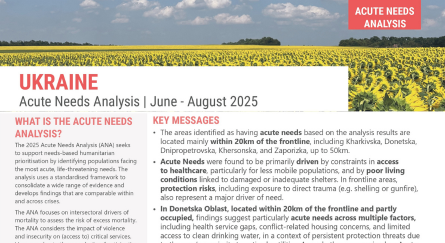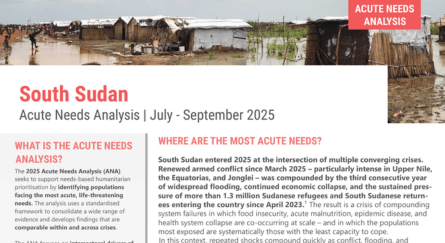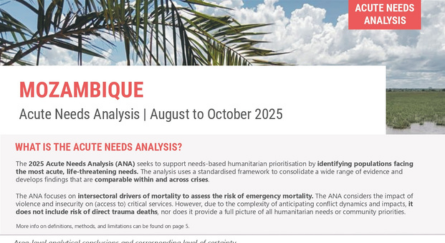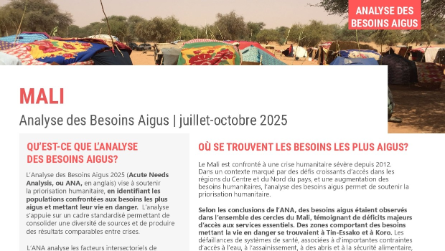


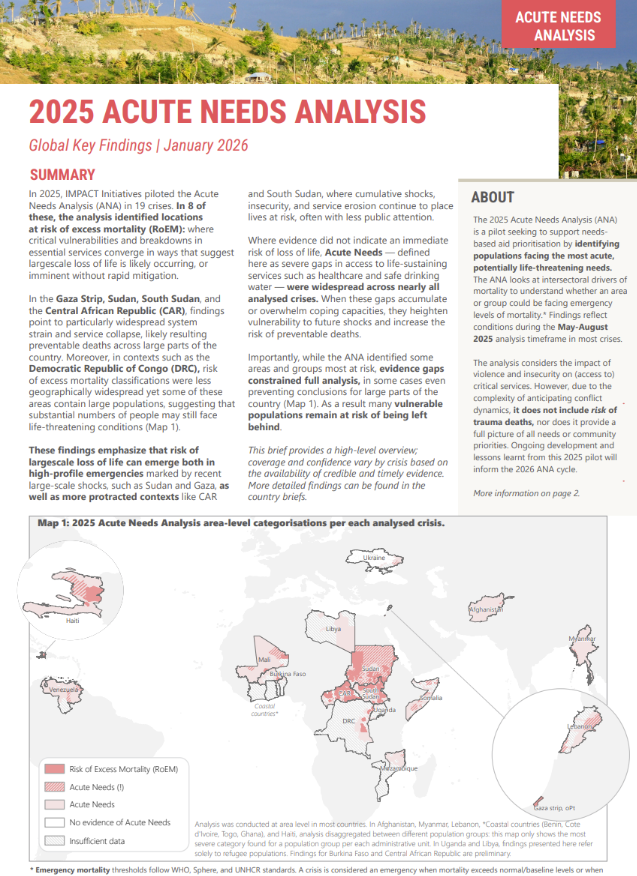
For 15 years, IMPACT has filled a critical gap in delivering high-quality, field-based data collection and analysis, particularly in hard-to-reach and complex settings. As the world’s largest independent data provider in crisis contexts, we have supported key decision-making processes to ensure assistance reaches those most in need.
In 2025, a shrinking funding environment made prioritization within and across crises more crucial than ever. In response, IMPACT accelerated the rollout of its Acute Needs Analysis (ANA), which focuses on urgent, preventable loss of life rather than providing a comprehensive overview of needs. It is designed to answer a single essential question: who is facing the most urgent, life‑threatening needs?
| The Acute Needs Analysis is a humanitarian research pilot project designed to identify populations facing urgent, life-threatening needs. Its purpose is to ensure these populations are brought to the attention of humanitarian decision-makers—especially in contexts where information is scarce or fragmented. The ANA does not aim to provide a comprehensive overview of all needs, nor to replace inclusive, system-wide planning processes. Rather, it complements these efforts by highlighting populations experiencing particularly acute needs, based on the primary and secondary data available to us. | 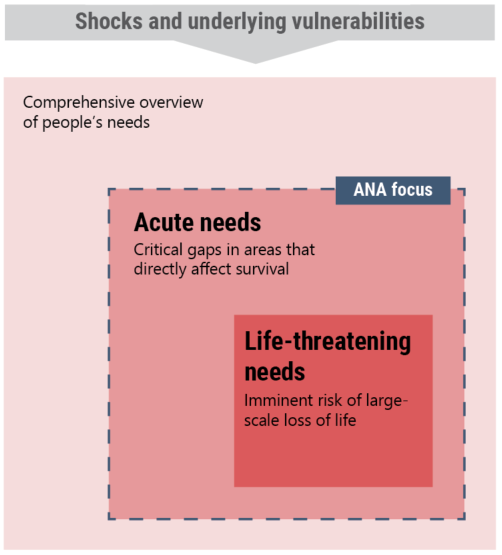 |
| Help decision-makers focus on urgent needs | Provide structured, transparent analysis even where data is incomplete | Support comparability and a global view of acute needs | ||
 |  |  | ||
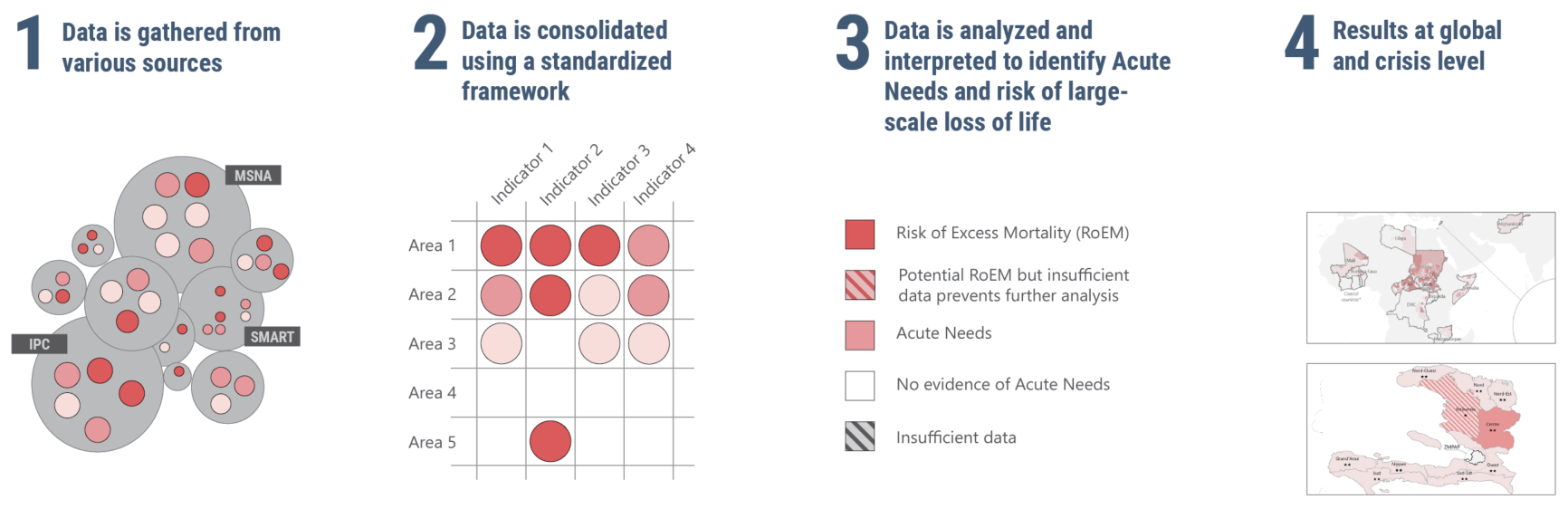
| In a constrained funding environment, humanitarian actors need to know who is facing urgent, life-threatening needs. The ANA seeks to answer that question using a clear methodology, and the best available evidence. | The ANA allows to make the most of existing primary and secondary data, transparently communicating evidence gaps, certainty levels, and assumptions. | By applying common definitions and methods, the ANA helps build a more consistent picture of risk—making it easier to compare situations and prioritize within and across crises. |
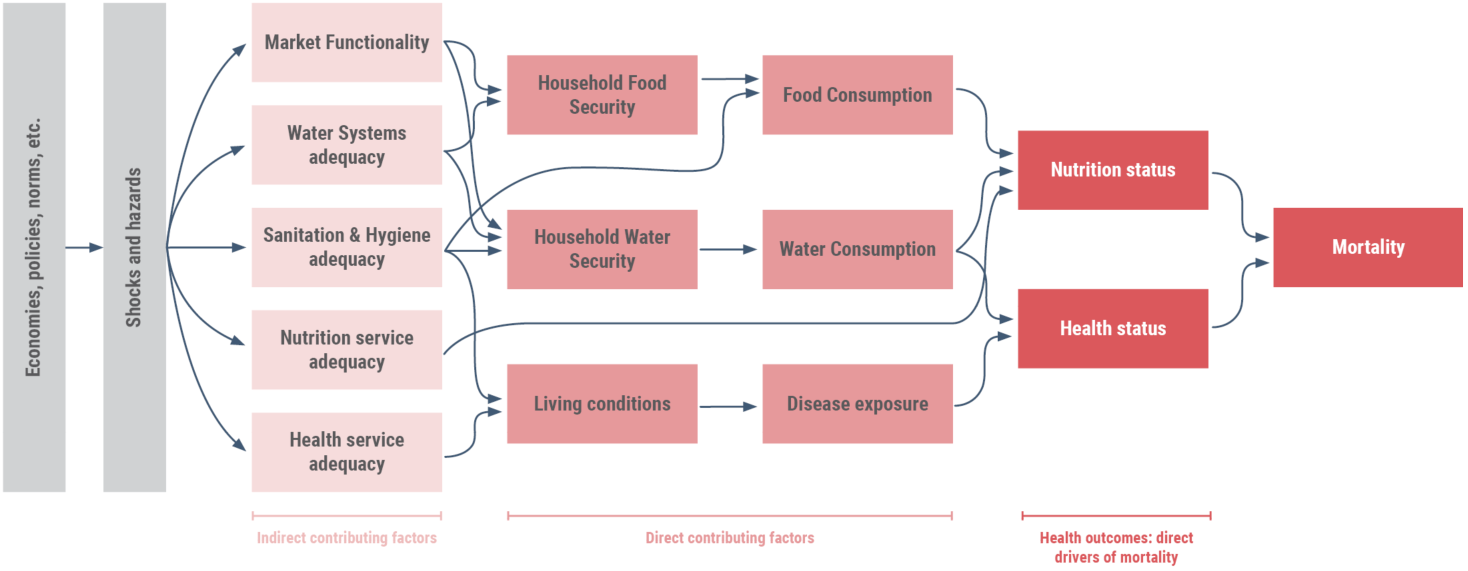
In the absence of robust, crisis-wide mortality data in most contexts, the Acute Needs Analysis looks at known drivers of mortality, to help identify people facing urgent, life-threatening needs. Quantitative and qualitative analyses are carried out by dedicated, country-based analysts with deep contextual knowledge.
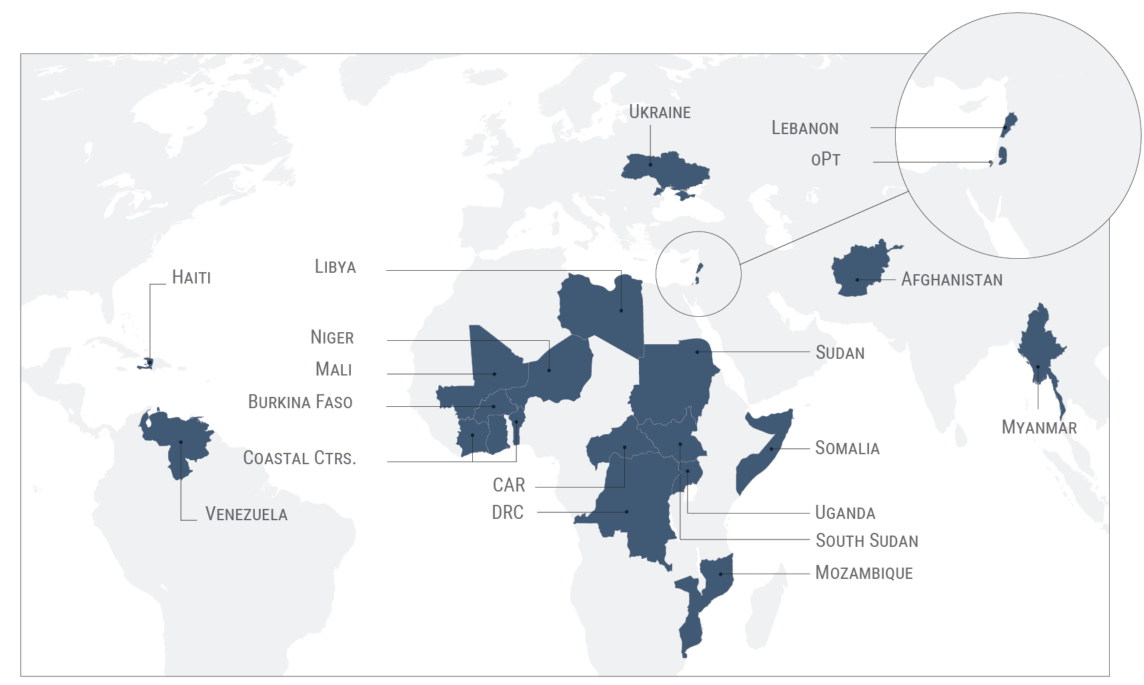
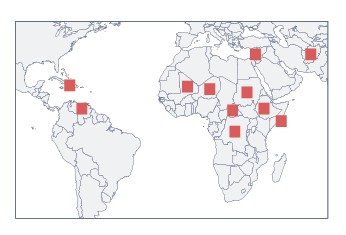
NB: The map shows the countries where the ANA pilot was implemented in 2025. Coverage is expected to expand to additional countries in 2026.