
Emergency Thread - Ebola Outbreak
- Share


The Democratic Republic of the Congo (DRC) is facing a new Ebola virus disease (EVD) outbreak, declared on May 15, 2026, by the Ministry of Public Health, Hygiene and Social Welfare, following the confirmation of Ebola virus cases of the Bundibugyo strain in Ituri Province. This is the 17th Ebola outbreak recorded in the country since 1976.
REACH teams in the DRC, Uganda, and South Sudan are mobilizing in support of the Ebola response, providing rapid analysis, information management, and targeted data collection to inform preparedness and response efforts. Current activities include mapping mobility patterns to identify areas connected to affected locations, analyzing vulnerabilities and health preparedness capacities in potentially exposed areas, and preparing knowledge, attitudes, and practices (KAP) assessments to inform risk communication and community engagement efforts.
Find below publications from trusted partners that IMPACT is coordinating with, in the context of this regional Ebola response:
- Lancet Ebola cross-boarder spillover risk study
- U-Report (UNICEF) analysis
- SSHAP overview of context and recommendations
- Ground Truth Solution research on community perceptions, suggestions and fears
Access all of our DRC, South Sudan, Uganda products on our Resource Center. Please note that most of our publications on DRC are available in French.
20 July 2026
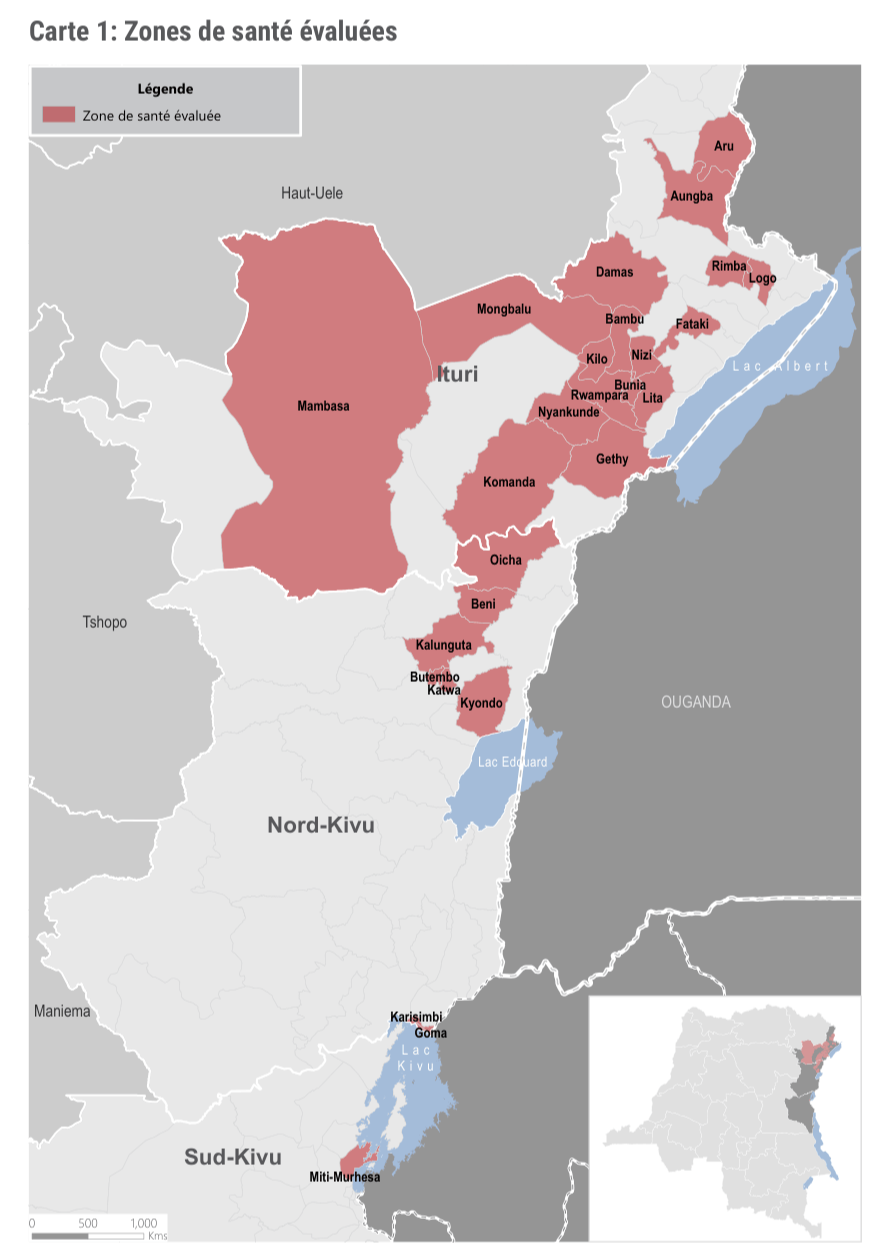
Évaluation rapide auprès des établissements scolaires concernant l’épidémie de maladie à virus Ebola (MVE)
Les établissements scolaires jouent un rôle essentiel dans la riposte à l’Ebola. Ils constituent des espaces privilégiés pour diffuser des informations fiables sur la maladie, promouvoir les comportements préventifs auprès des élèves, du personnel éducatif et des familles et contribuer à la détection précoce d’éventuels cas suspects. Des évaluations menées dans les zones affectées mettent en évidence d’importantes lacunes dans la préparation des établissements scolaires face au risque épidémique:
|  |
26 June 2026
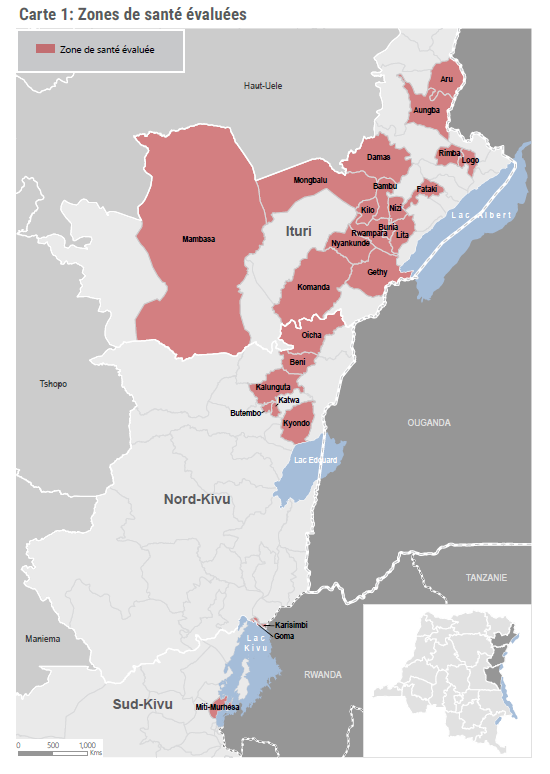
Évaluation rapide auprès des infrastructures sanitaires concernant l’épidémie de maladie à virus Ebola (MVE)
Les infrastructures sanitaires et les personnels de santé occupent une place centrale dans la réponse à l’épidémie. Ils constituent le premier point de contact pour l’identification et la prise en charge des cas suspects, la mise en œuvre des mesures de prévention et de contrôle des infections, la sensibilisation des communautés ainsi que le maintien des services de santé essentiels. Une évaluation rapide menée par REACH auprès du personnel de santé de 92 structures sanitaires met en évidence plusieurs résultats clés:
|  |
25 June 2026
Suivi de la situation humanitaire – Territoire de Djugu, Irumu et Mambasa (Ituri-RDC)
Cette suivi de la situation humanitaire met en évidence les vulnérabilités pré-Ebola dans la province de l’Ituri. Dans de nombreuses zones touchées, la grande majorité des communautés vivaient déjà dans un contexte marqué par d’importants déplacements internes, une forte insécurité alimentaire, une dépendance à des sources d’eau non sûres et des barrières financières substantielles limitant l’accès aux soins. | 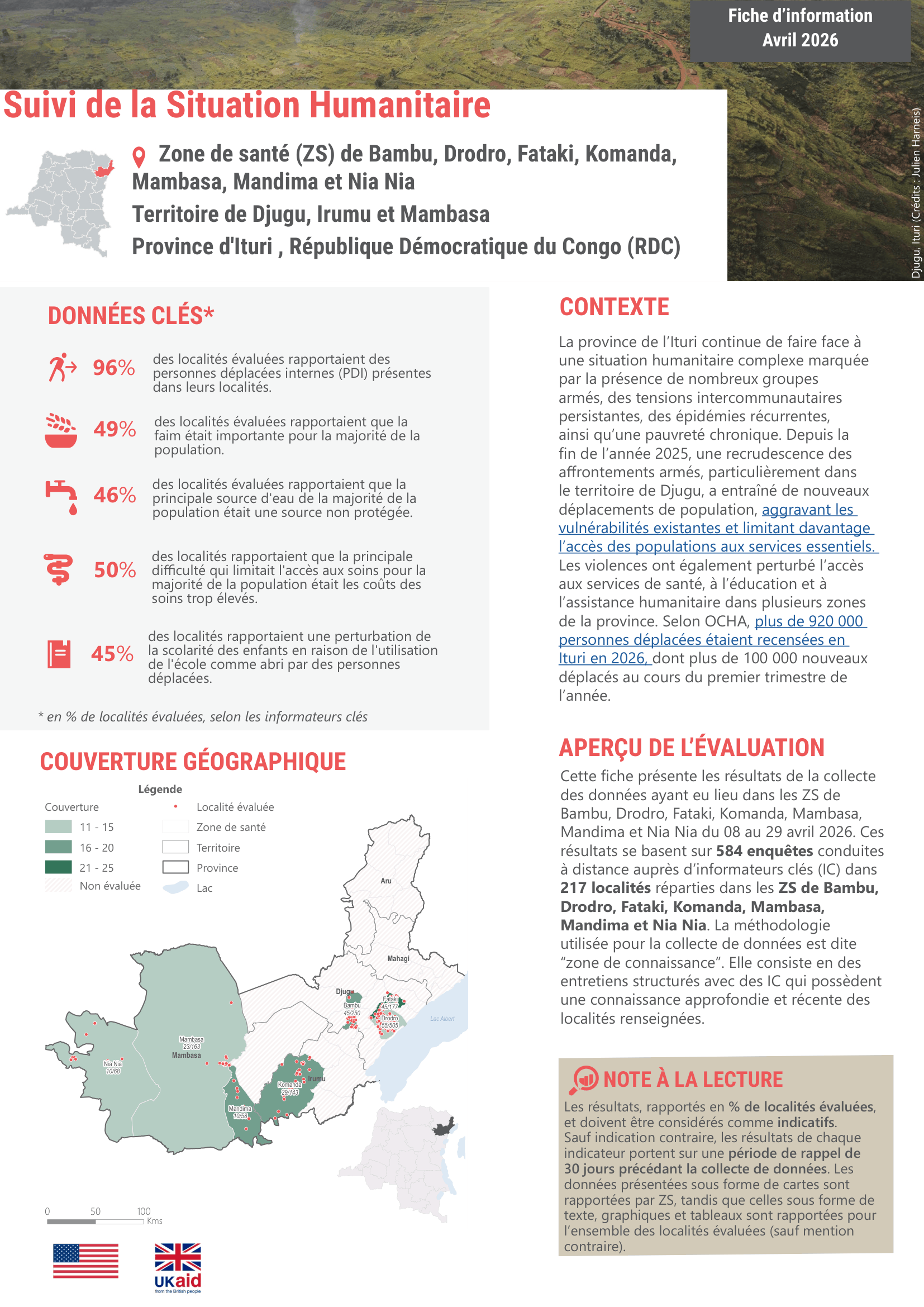 |
15 June 2026
Évaluation rapide des connaissances, attitudes et pratiques (CAP) concernant l’épidémie de maladie à virus Ebola (MVE)
| Face à l’épidémie d’Ebola (MVE), l’adoption de comportements préventifs, l’acceptation des mesures de santé publique, la confiance envers les acteurs de la riposte ainsi que l’accès à une information fiable sont déterminants pour l’efficacité des interventions. Dans ce contexte, REACH a conduit une évaluation rapide des connaissances, attitudes et pratiques auprès des communautés dans plusieurs zones de santé affectées par l’épidémie, afin de documenter les connaissances sur la MVE, les perceptions du risque, les comportements de prévention ainsi que les principales sources d’information. | 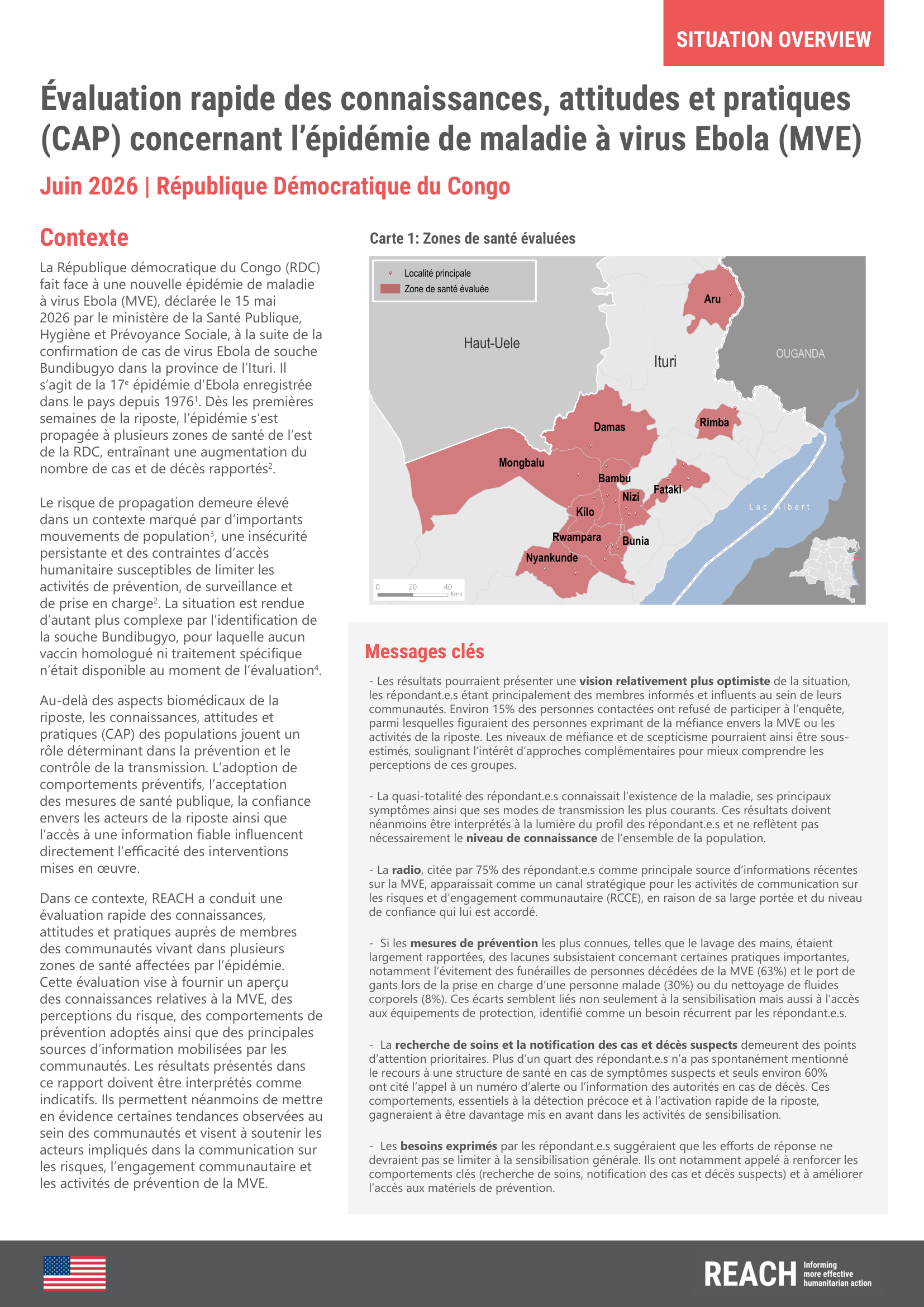 |
11 June 2026
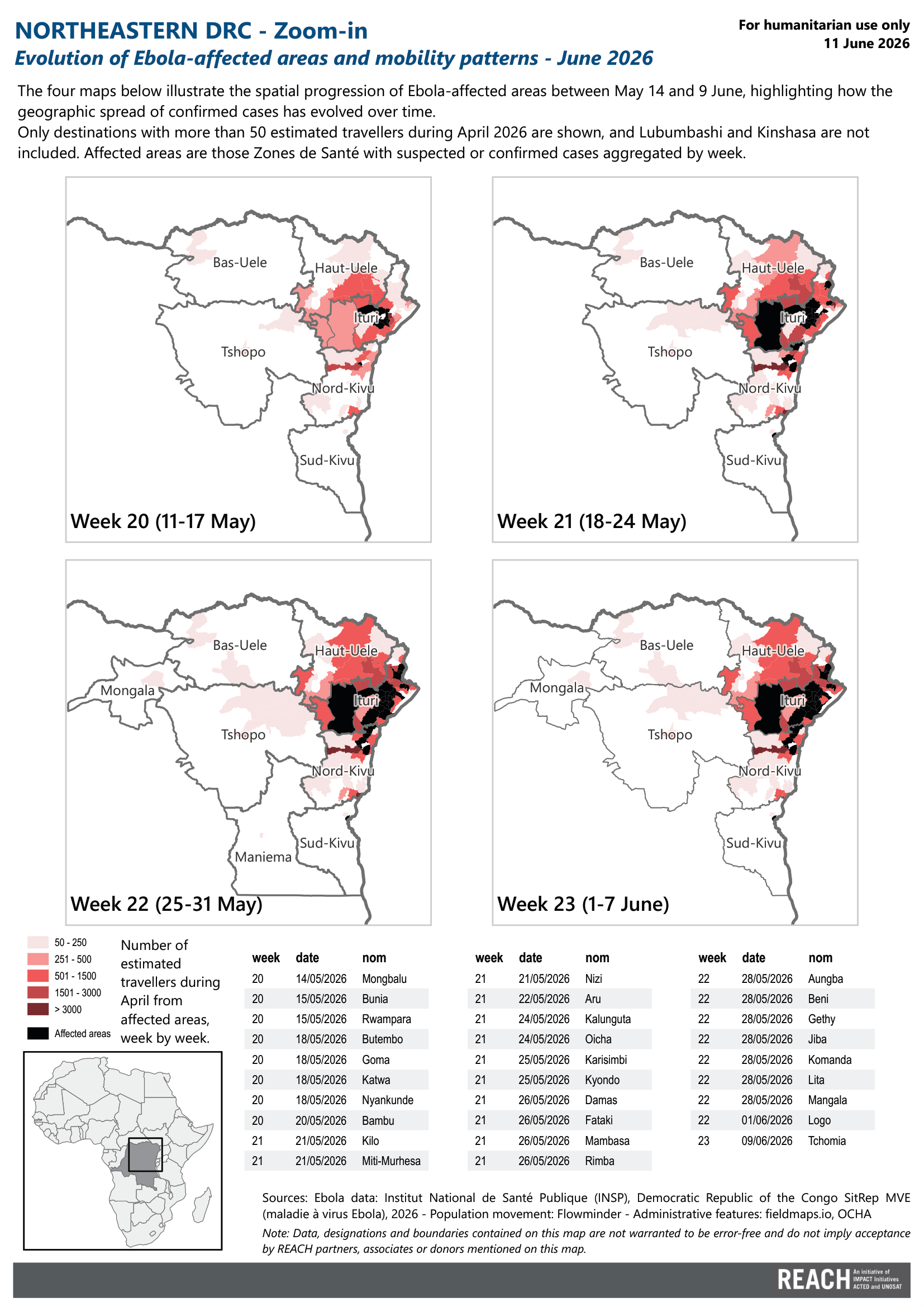
Regional overview: mobility patterns and health access vulnerabilities
| Since the Ebola outbreak, its spread has largely followed highly connected areas around the initial cluster in Ituri. REACH teams have updated their analysis and maps to reflect the rapid increase in confirmed cases and newly affected health zones. Key takeaways:
|  |
29 May 2026
2026 Ebola Outbreak: Mobility and Health System Vulnerabilities in Eastern DRC and Bordering Areas
| In the DRC’s 17th Ebola outbreak, declared on 15 May, a four-week detection gap may have allowed the virus to spread through routine population movements. The REACH team has synthesised available mobility data and secondary sources to identify key vulnerabilities. Eastern DRC: Mobility data in the DRC shows that five provinces not currently classified as high-risk remain closely connected to affected areas, highlighting the urgent need to expand surveillance, Risk Communication and Community Engagement (RCCE), and preparedness beyond known hotspots. Uganda: Movements along the DRC–Uganda border have been well documented as being shaped by strong economic and social ties between communities. This includes links with areas hosting South Sudanese refugees in Northern Uganda. South Sudan: Areas like Yambio and Morobo are key entry points from the DRC, but limited health system capacity and unmet needs may delay case detection, underscoring the importance of strengthened early warning and response systems. | 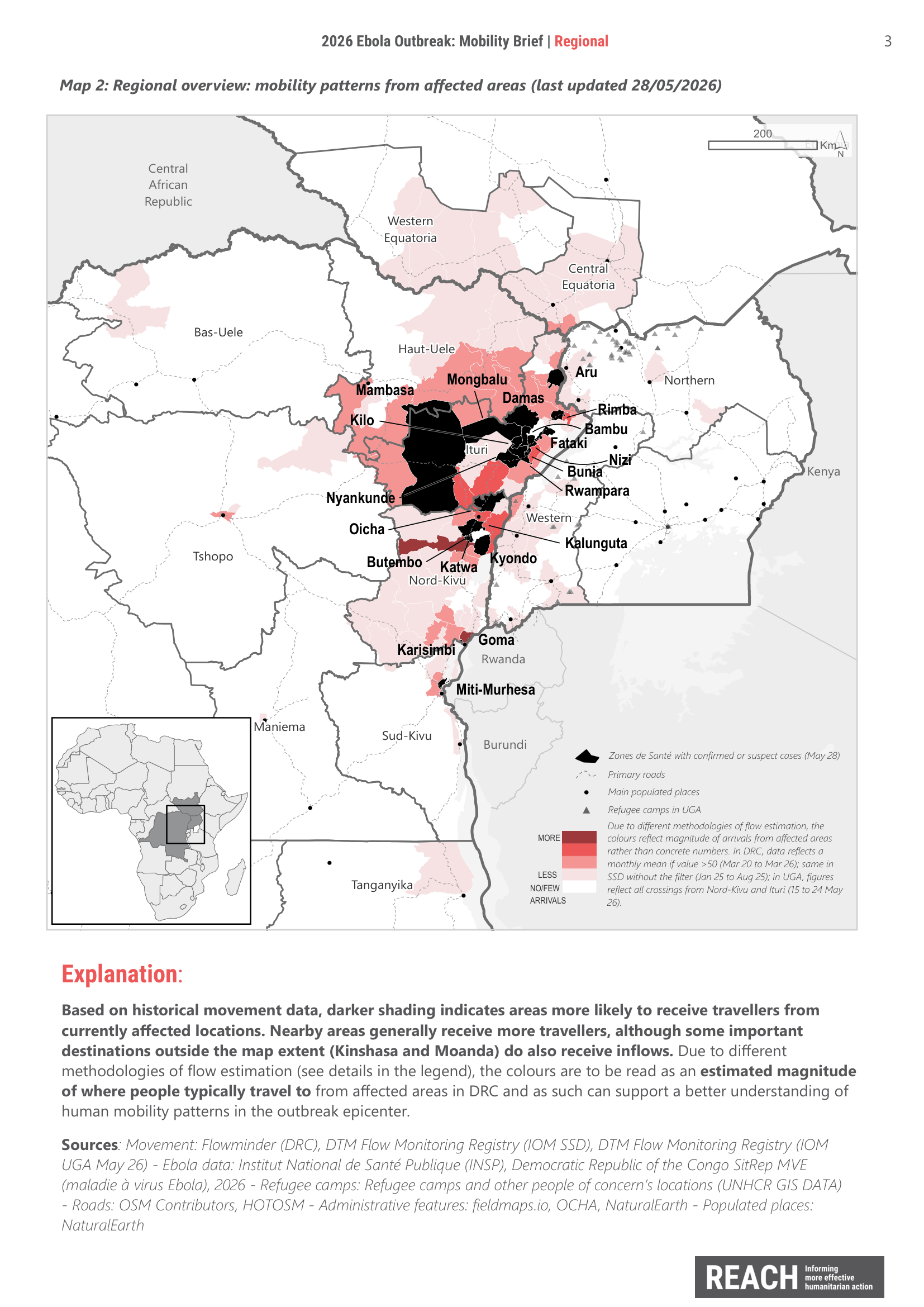 |