
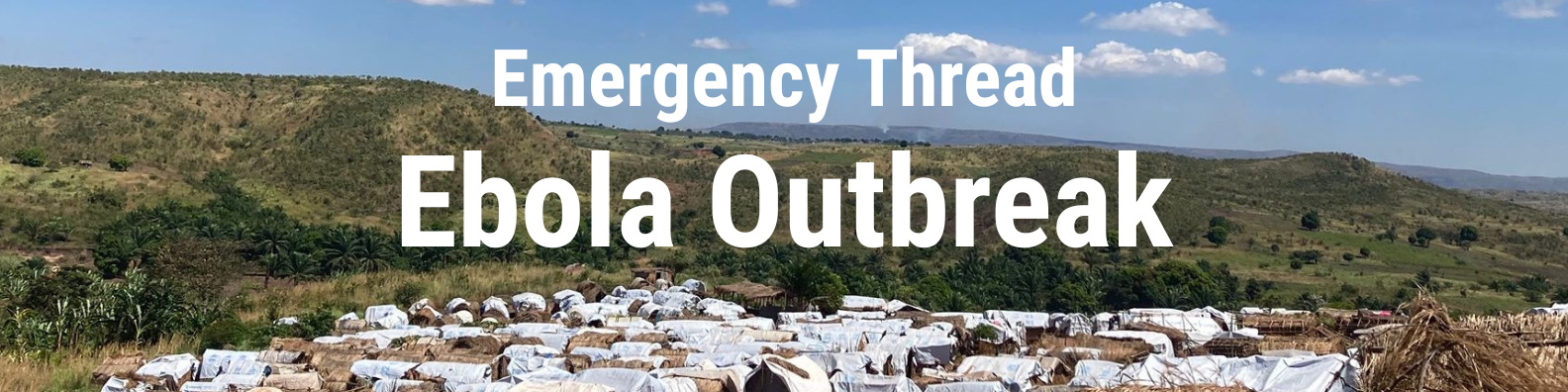
Emergency Thread - Ebola Outbreak
- Share


The Democratic Republic of the Congo (DRC) is facing a new Ebola virus disease (EVD) outbreak, declared on May 15, 2026, by the Ministry of Public Health, Hygiene and Social Welfare, following the confirmation of Ebola virus cases of the Bundibugyo strain in Ituri Province. This is the 17th Ebola outbreak recorded in the country since 1976.
REACH teams in the DRC, Uganda, and South Sudan are mobilizing in support of the Ebola response, providing rapid analysis, information management, and targeted data collection to inform preparedness and response efforts. Current activities include mapping mobility patterns to identify areas connected to affected locations, analyzing vulnerabilities and health preparedness capacities in potentially exposed areas, and preparing knowledge, attitudes, and practices (KAP) assessments to inform risk communication and community engagement efforts.
Find below publications from trusted partners that IMPACT is coordinating with, in the context of this regional Ebola response:
- Lancet Ebola cross-boarder spillover risk study
- U-Report (UNICEF) analysis
- SSHAP overview of context and recommendations
- Ground Truth Solution research on community perceptions, suggestions and fears
Access all of our DRC, South Sudan, Uganda products on our Resource Center. Please note that most of our publications on DRC are available in French.
21 September 2026
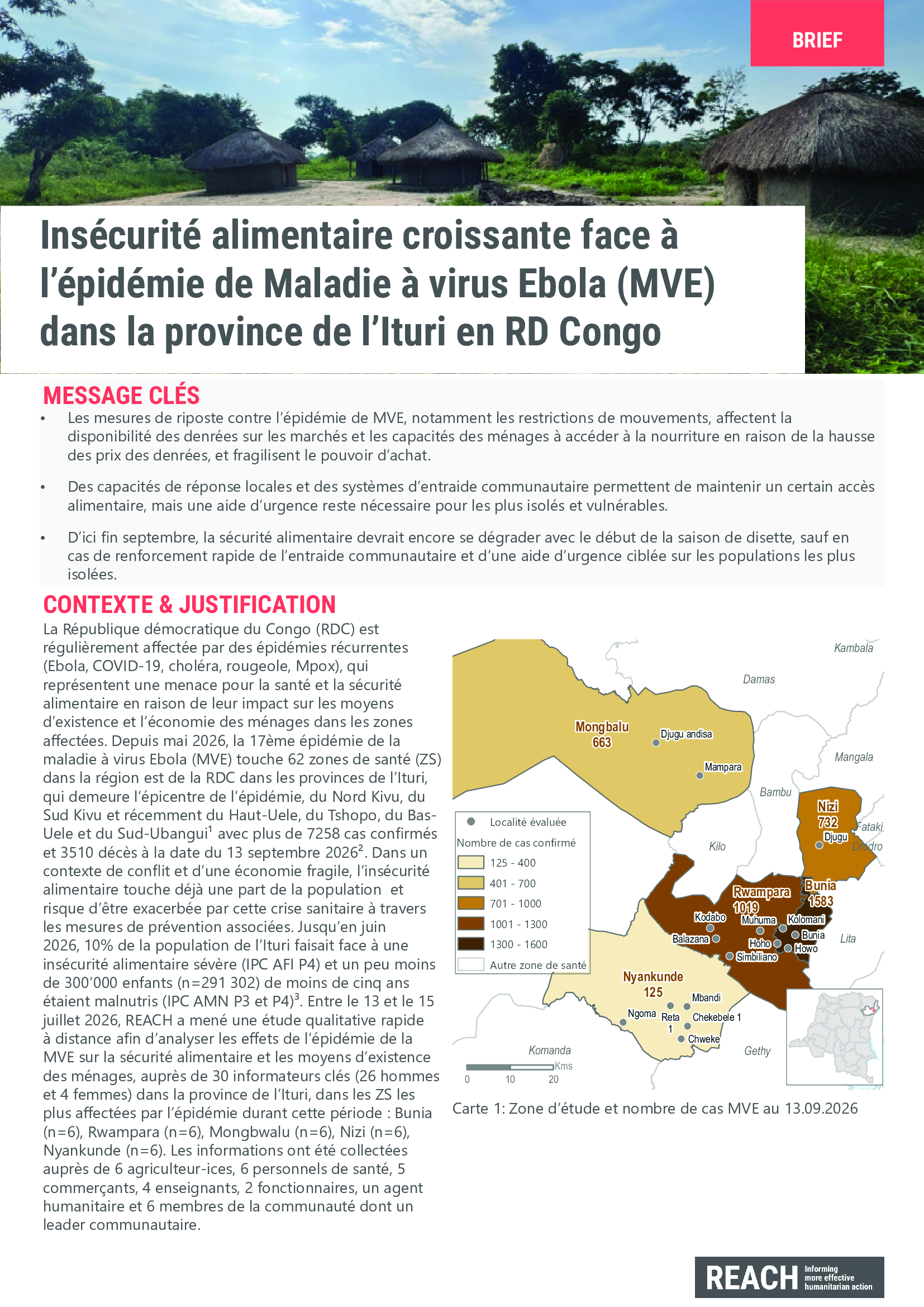
Insécurité alimentaire croissante face à l’épidémie de maladie à virus Ebola (MVE) en Ituri
Messages clés:
|  |
15 September 2026
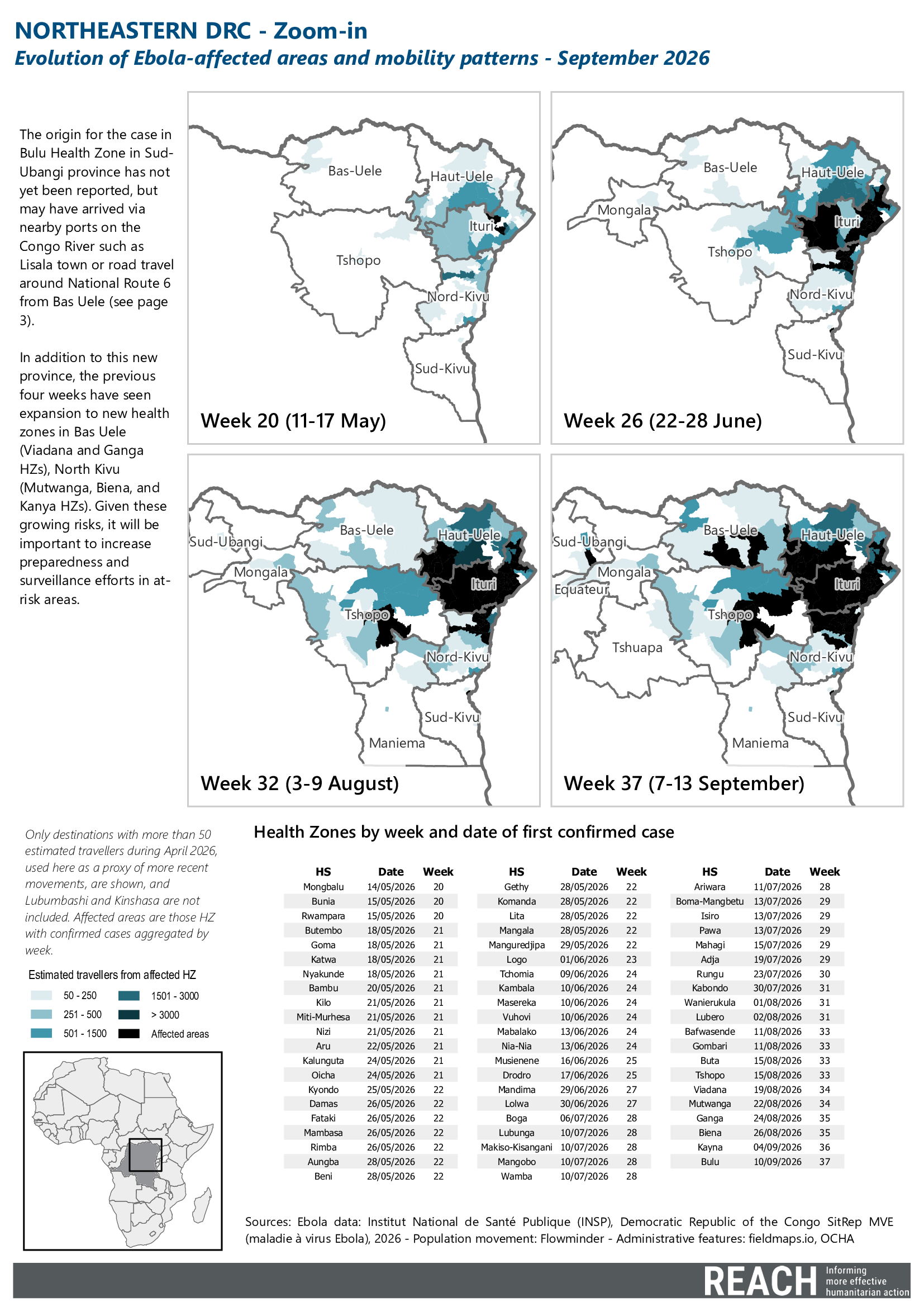
Regional overview: Ebola mobility patterns – September 2026
Key findings:
|  |
20 August 2026
Regional overview: Ebola mobility patterns – August 2026
Key findings:
| 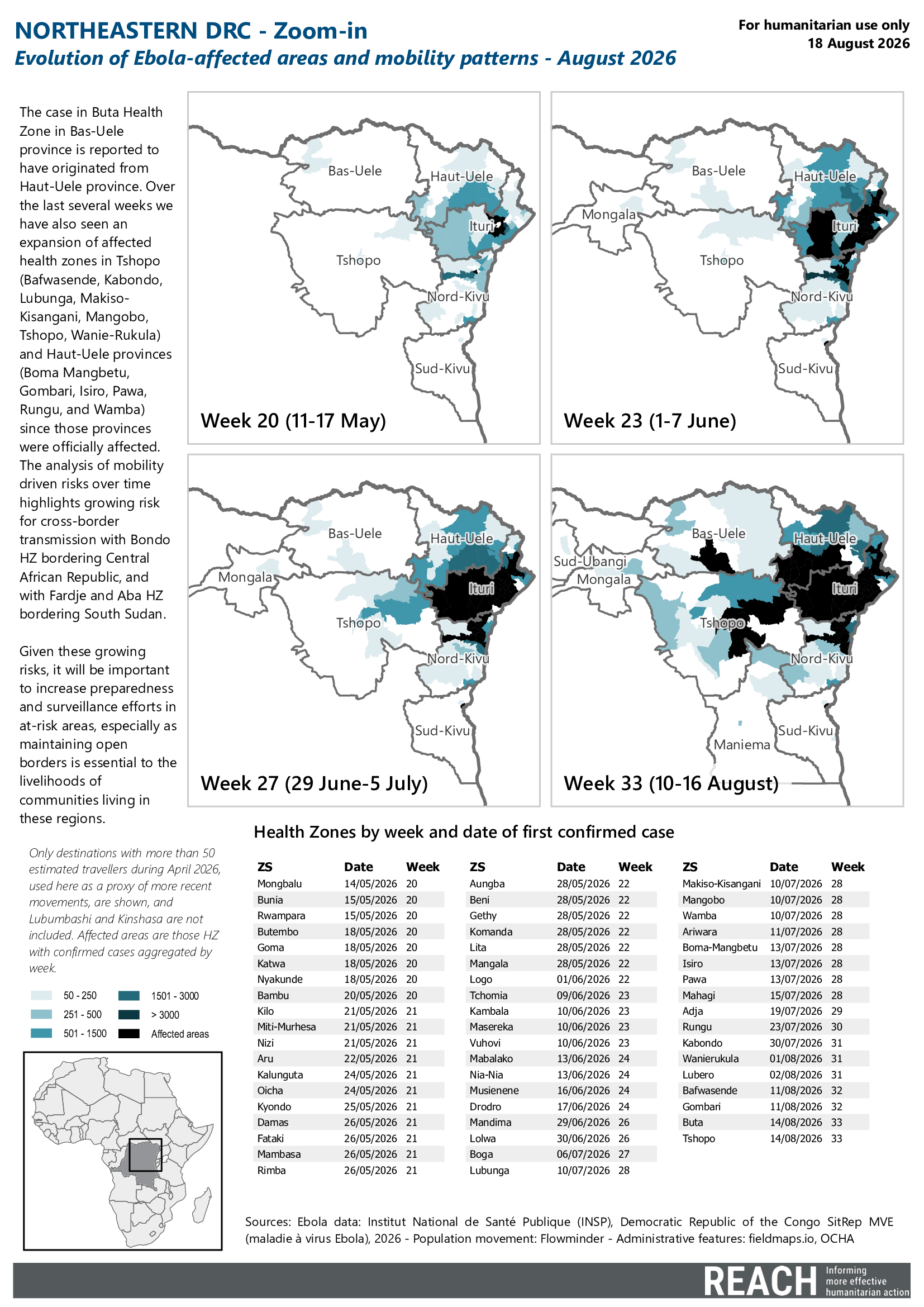 |
7 August 2026
Uganda – Ebola Knowledge, Attitudes, and Practices Survey in Ugandan Refugee Sites
Uganda has reported a smaller but epidemiologically linked outbreak resulting from cross-border transmission from the DRC. Refugee populations may face heightened vulnerability to Ebola transmission due to frequent population movements, crowded living conditions, barriers to accessing information and services, and continued epidemiological links between Uganda and affected areas of eastern DRC. At the same time, many settlements host populations with strong social, familial, and economic connections to South Sudan, creating potential pathways for cross-border disease spread should transmission occur within refugee communities. Key findings:
Access the Knowledge, Attitudes and Practices (KAP) assessment results | 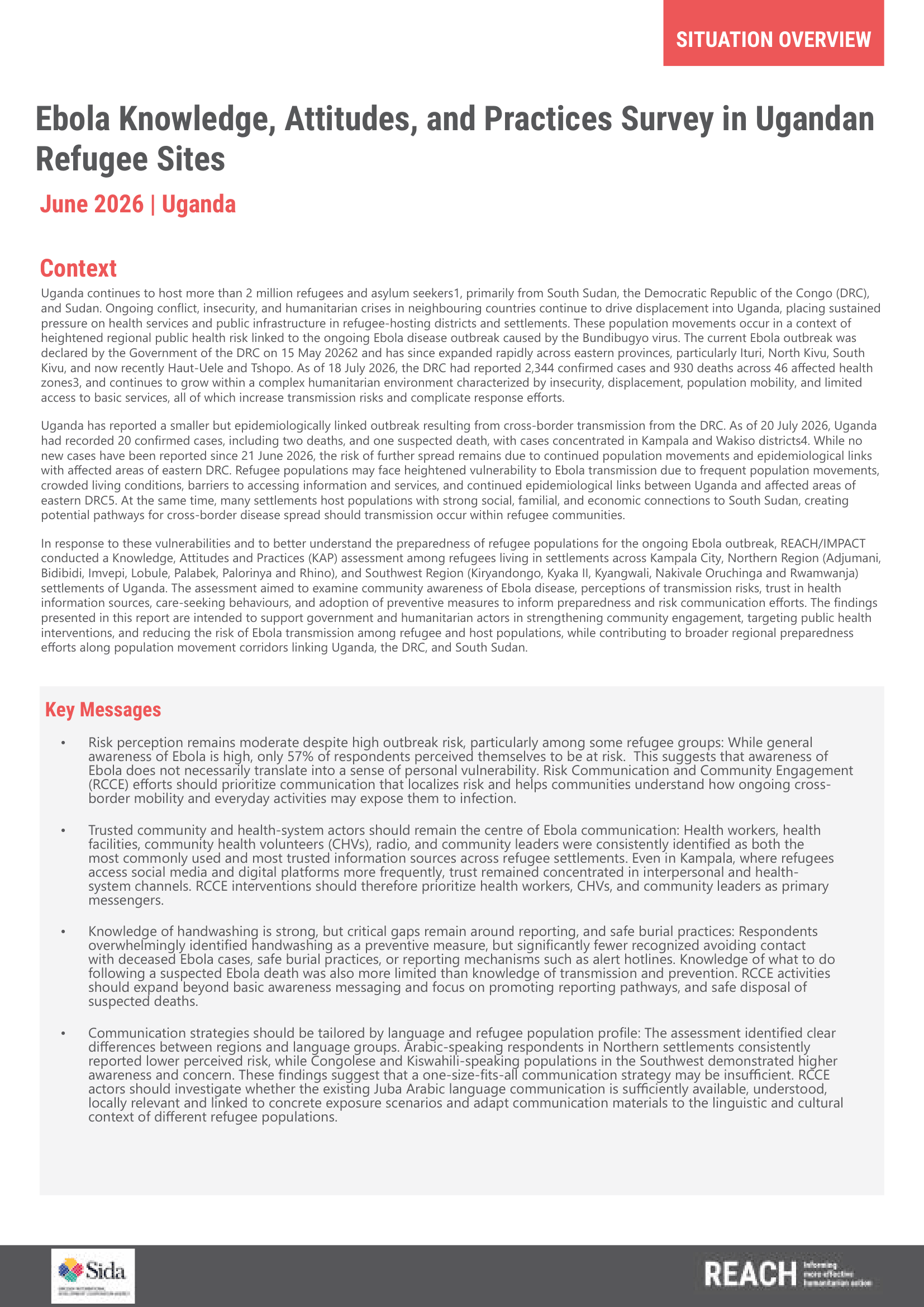 |
7 August 2026
South Sudan – Rapid Ebola Virus Disease Knowledge Assessment in High-Risk Areas
South Sudan faces an elevated and sustained risk of Ebola Virus Disease (EVD) importation, driven by an active outbreak of the Bundibugyo strain in the Democratic Republic of Congo and confirmed cross-border transmission into Uganda. Key findings:
| 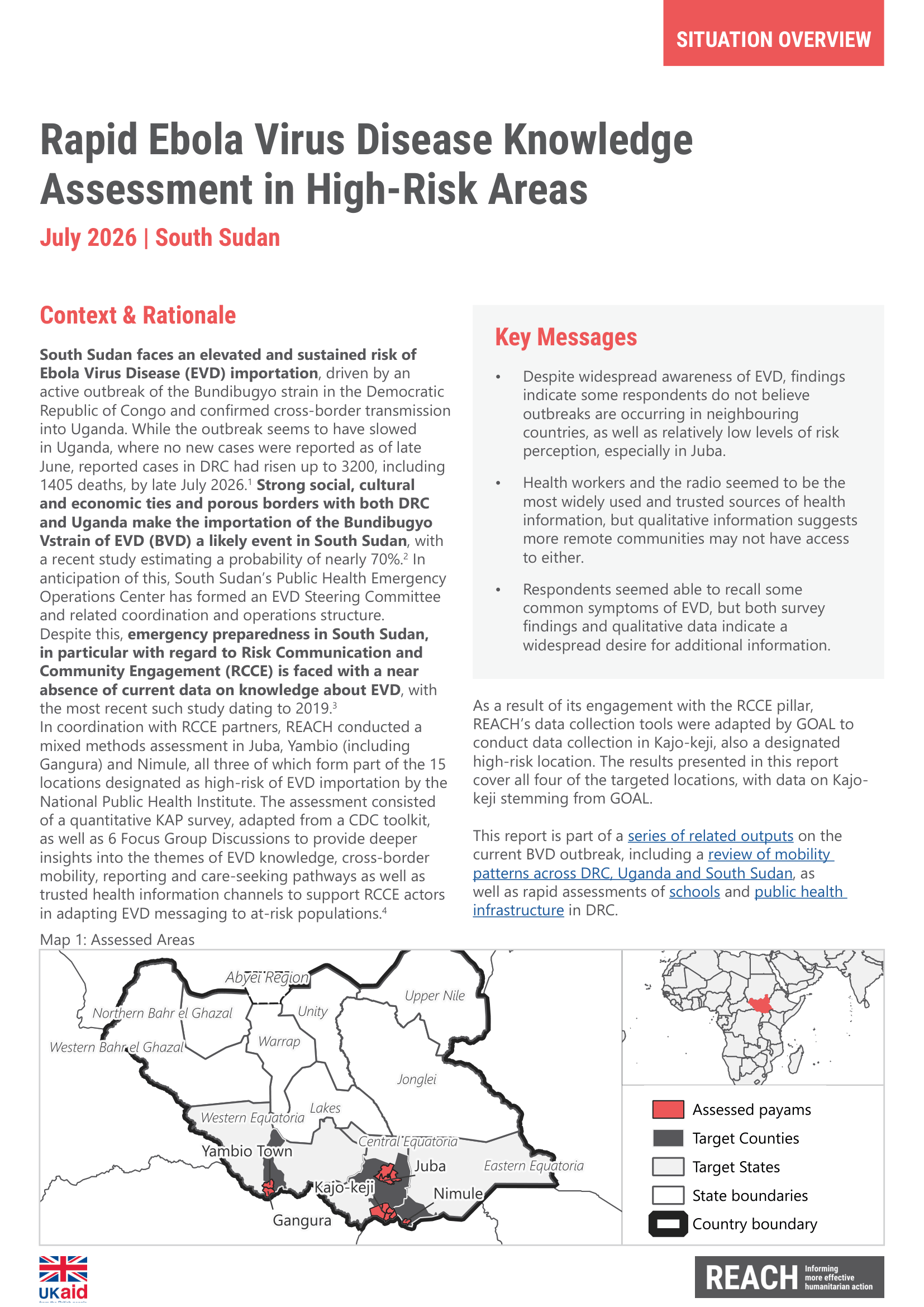 |
20 July 2026
Regional overview: Evolution of Ebola-affected areas and mobility patterns
Following the new confirmed Ebola cases in Tshopo and Haut-Uele Provinces as of July 2026, IMPACT has revised its previous maps on regional mobility patterns originating from currently affected health zones:
| 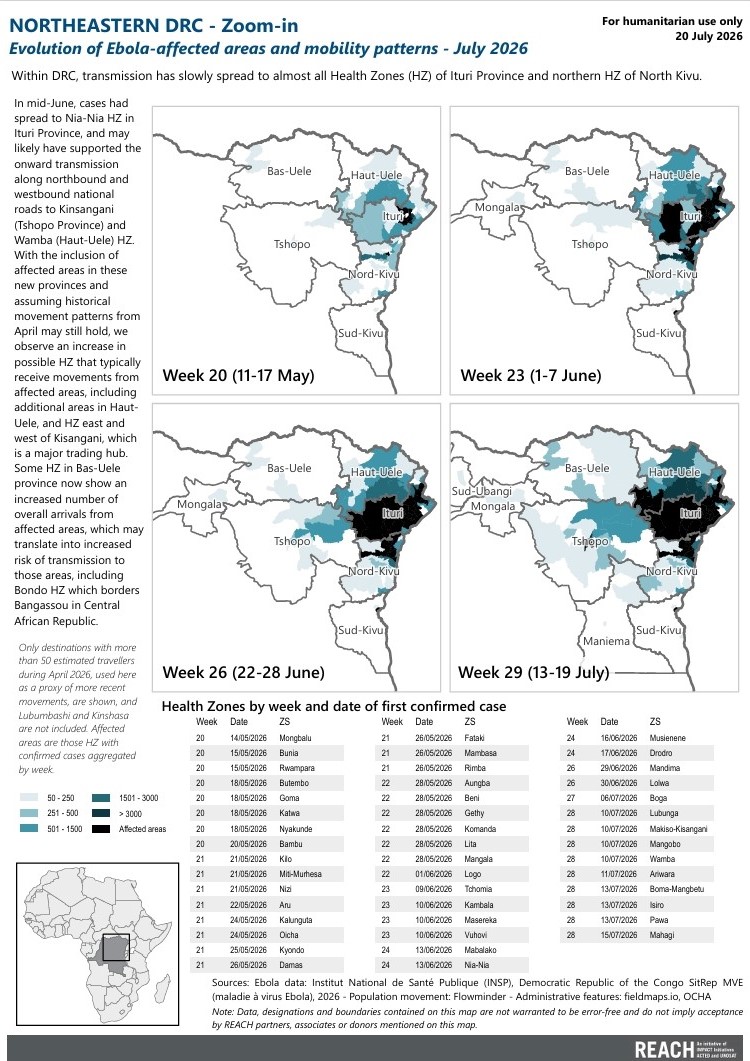 |