

Ghana
Country Overview
In Ghana, humanitarian challenges are largely driven by persistent development disparities between the northern and southern regions of the country. In the north, livelihoods remain heavily dependent on agriculture and livestock production, making communities particularly vulnerable to climate-related shocks. Increasingly erratic rainfall patterns continue to affect agricultural yields, reduce household incomes, and contribute to sustained levels of food insecurity among the most vulnerable populations.
At the same time, the arrival of refugees and internally displaced persons in the Savanes Region is placing growing pressure on natural resources, infrastructure, and basic services. Access to water, arable land, and livelihood opportunities has become an increasingly important concern for both host communities and displaced populations. In this context, access to reliable and up-to-date information is critical to understanding evolving needs and ensuring that humanitarian and development interventions are appropriately targeted.
Through its REACH Initiative, IMPACT contributes to strengthening humanitarian information systems in both countries by developing data management and visualization tools, including 5W dashboards and StoryMaps, to support coordination and improve the monitoring of humanitarian interventions. IMPACT also implements capacity-strengthening and training activities aimed at enhancing data quality, analysis, and use in decision-making processes. In Ghana, IMPACT works closely with the National Disaster Management Organisation (NADMO) to support evidence-based coordination and planning of humanitarian responses.
Research Highlights
| Humanitarian Situation in northern Ghana – Storymap March 2026 This tool consolidates reported information on humanitarian interventions implemented across key northern regions, namely the Northern, North East, Savannah, Upper East and Upper West regions. By providing a clear, up-to-date, and coherent overview of activities carried out by humanitarian actors, the 5W aims to facilitate complementarity among partners, support efficient resource allocation, and help identify geographic or sectoral gaps while minimizing the risk of duplication. | 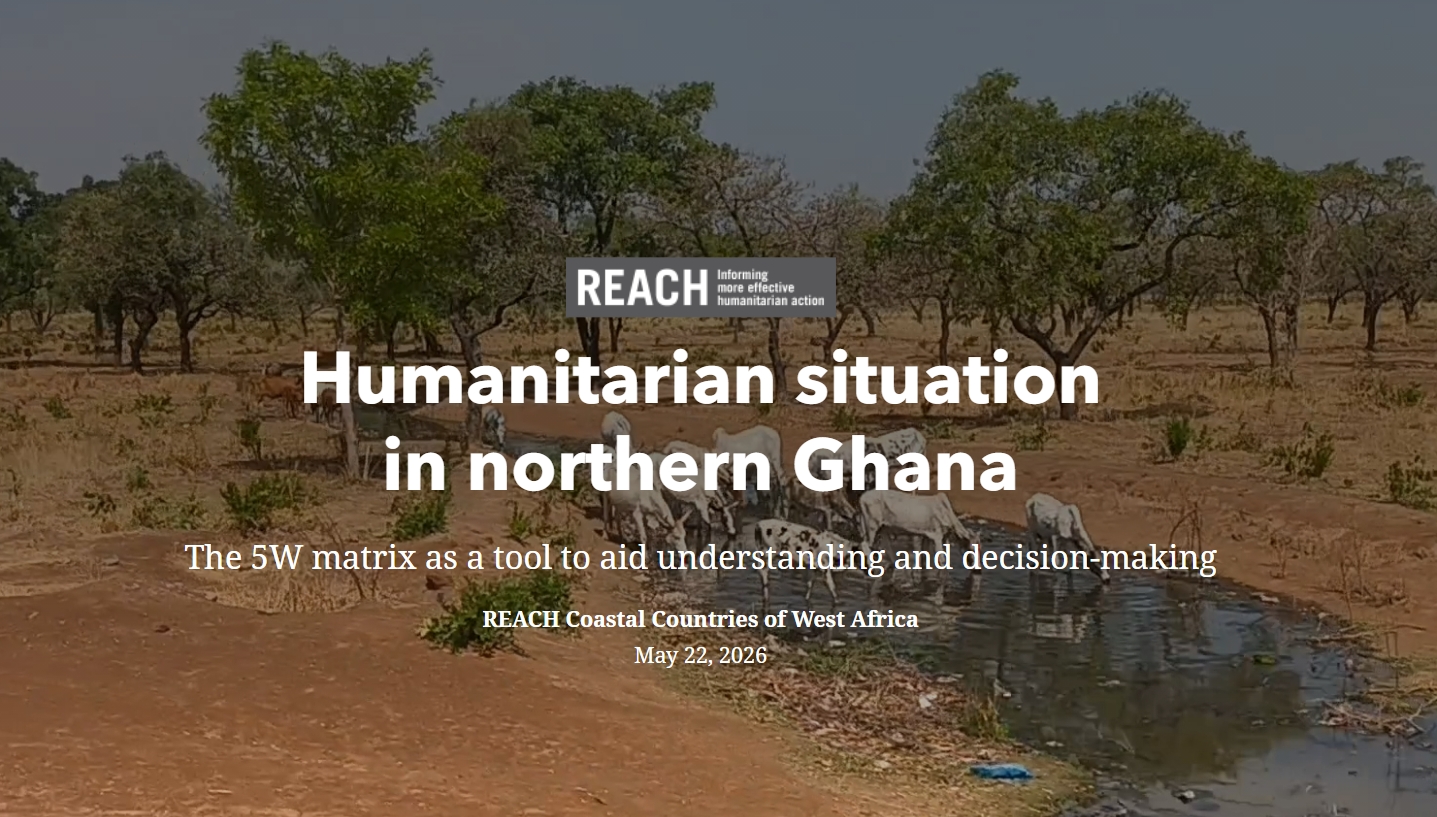 | |