

Mauritania
Country overview
| French translation available |
Mauritania has maintained relative stability in a regional context marked by persistent security and humanitarian crises. However, the wilaya (province) of Hodh Chargui, located along the border with Mali, has been affected for more than a decade by the repercussions of the conflict in its neighbouring country.
One of the main consequences of the crisis in Hodh Chargui has been the influx of Malian refugees and Mauritanian returnees. According to the latest data, more than 293,000 refugees and returnees are currently present in the region. Since the end of October 2025, the humanitarian situation in Hodh Chargui has rapidly deteriorated as a result of the intensification of the conflict in Mali and the continued arrival of displaced populations.
In this context, IMPACT established its presence in Mauritania in April 2026 to strengthen information management capacities and provide strategic technical support to the humanitarian response in Hodh Chargui. IMPACT is leading the monitoring of refugee arrivals and population movements across 46 villages. IMPACT also provides technical support to partners to conduct rapid multisectoral needs assessments following the arrival of significant numbers of refugees in a given locality.
IMPACT is also implementing six territorial assessments across six intervention villages. The information collected through these assessments is intended to provide humanitarian actors operating in these locations with reliable, high-quality, and actionable data to inform the planning and adaptation of humanitarian strategies and interventions in the targeted villages.
Research Highlights
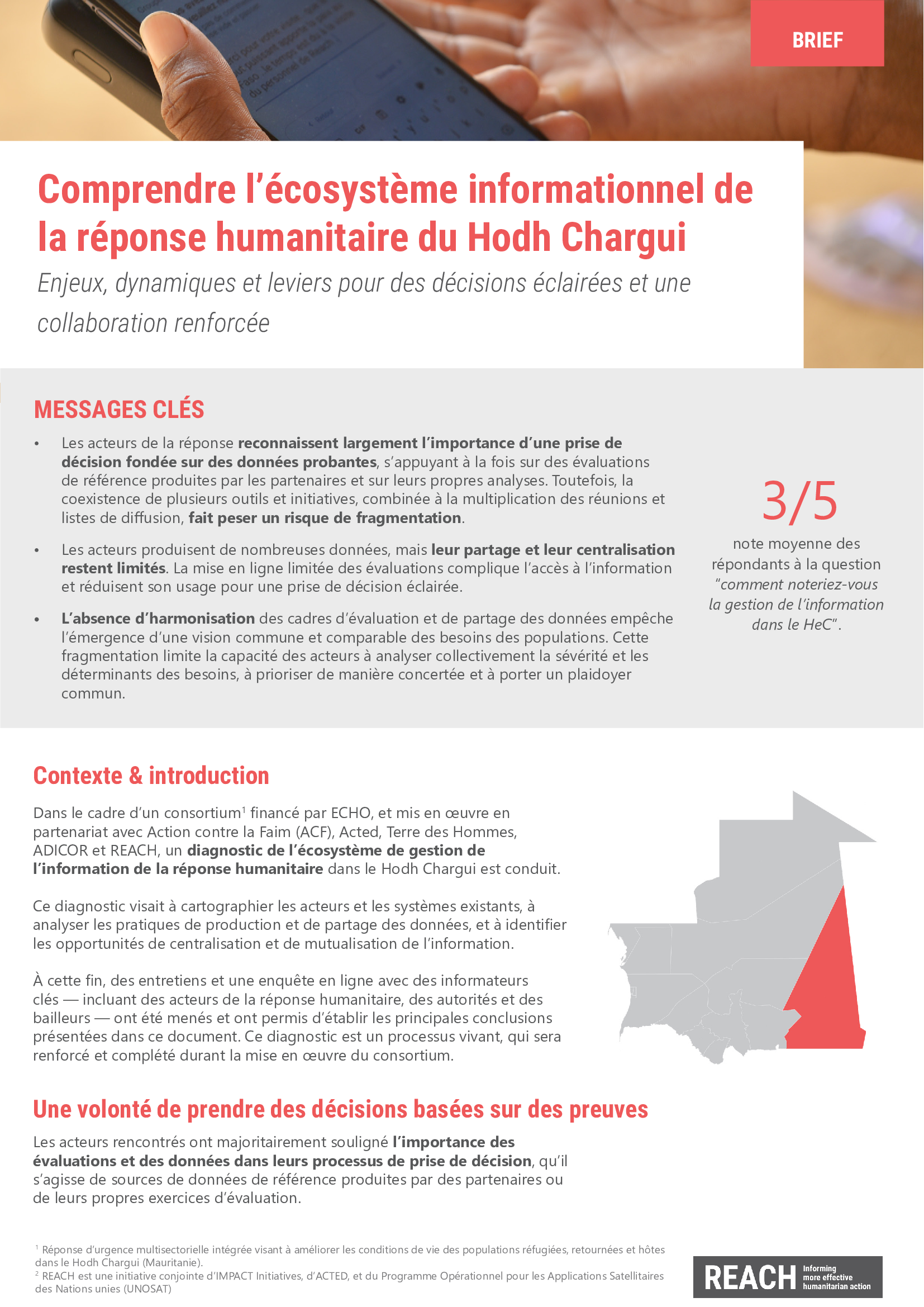
| Understanding the Humanitarian Information Ecosystem in Hodh Chargui September 2026 REACH and its partners conducted a diagnostic of the humanitarian information management ecosystem in Hodh Chargui. The diagnostic aimed to map existing actors and systems, analyse data production and sharing practices, and identify opportunities for information centralisation and sharing. Key findings
|  | |
| ||