

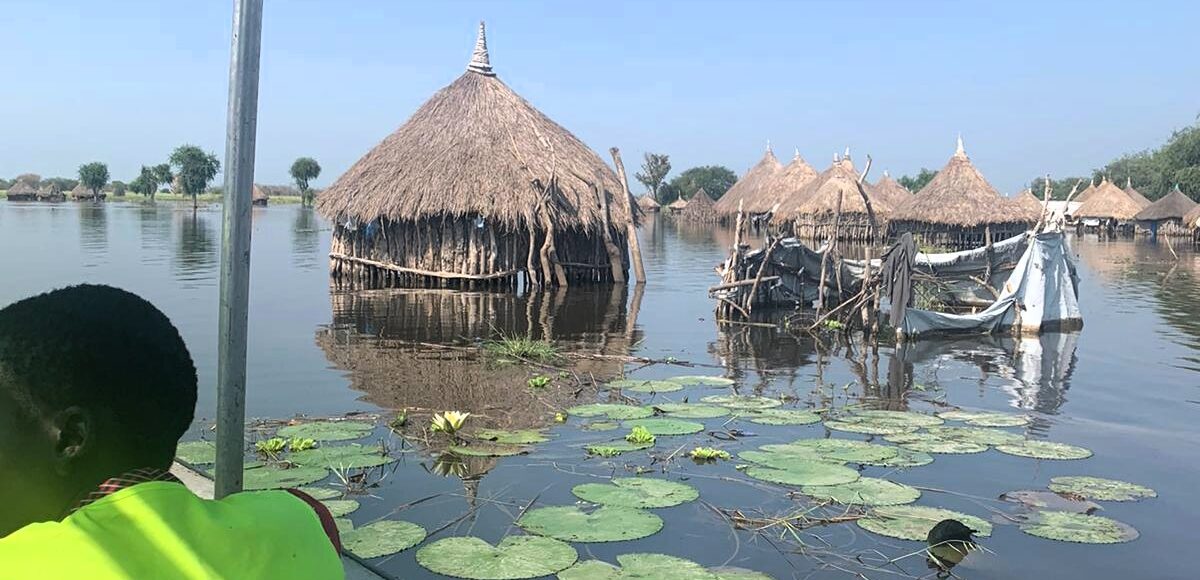

South Sudan is highly exposed to climate hazards, and above-average rains continue to shape the humanitarian landscape. Communities face multiple, compounding challenges, including recurrent flooding, food insecurity, public health risks, and ongoing conflicts, which have further deepened people’s needs, as highlighted in the OCHA South Sudan Humanitarian Snapshot.
To better inform humanitarian response, IMPACT, through the REACH Initiative, has been conducting advanced flood impact mapping. These analyses, conducted as part of the National Flood Prevention and Response Taskforce, identify where floods occur and quantify their impacts on critical infrastructure and essential services. This approach helps target support where it’s most needed, building resilience, reducing future risks, and protecting communities.
Northern counties as Panyijiar, Mayendit, Leer, Koch, and Guit are among the most exposed, facing a combination of widespread inundation, damaged infrastructure, and difficult access to essential services. Across the five assessed counties, the latest briefs indicate that approximately 284,500 people have been directly affected by flooding. In Mayendit, the situation is particularly severe, with 73% of the population affected.
The assessments show that when local facilities are flooded, access to health and education services, administrative buildings, and water points is rapidly reduced, adding pressure to an already severe humanitarian situation.
Transport is among the most affected sectors. In Guit, all recorded transport infrastructure was exposed to flooding, severely restricting mobility. In Koch County, 87% of mapped buildings within flood-affected areas were also exposed, leaving communities with very limited options for movement.
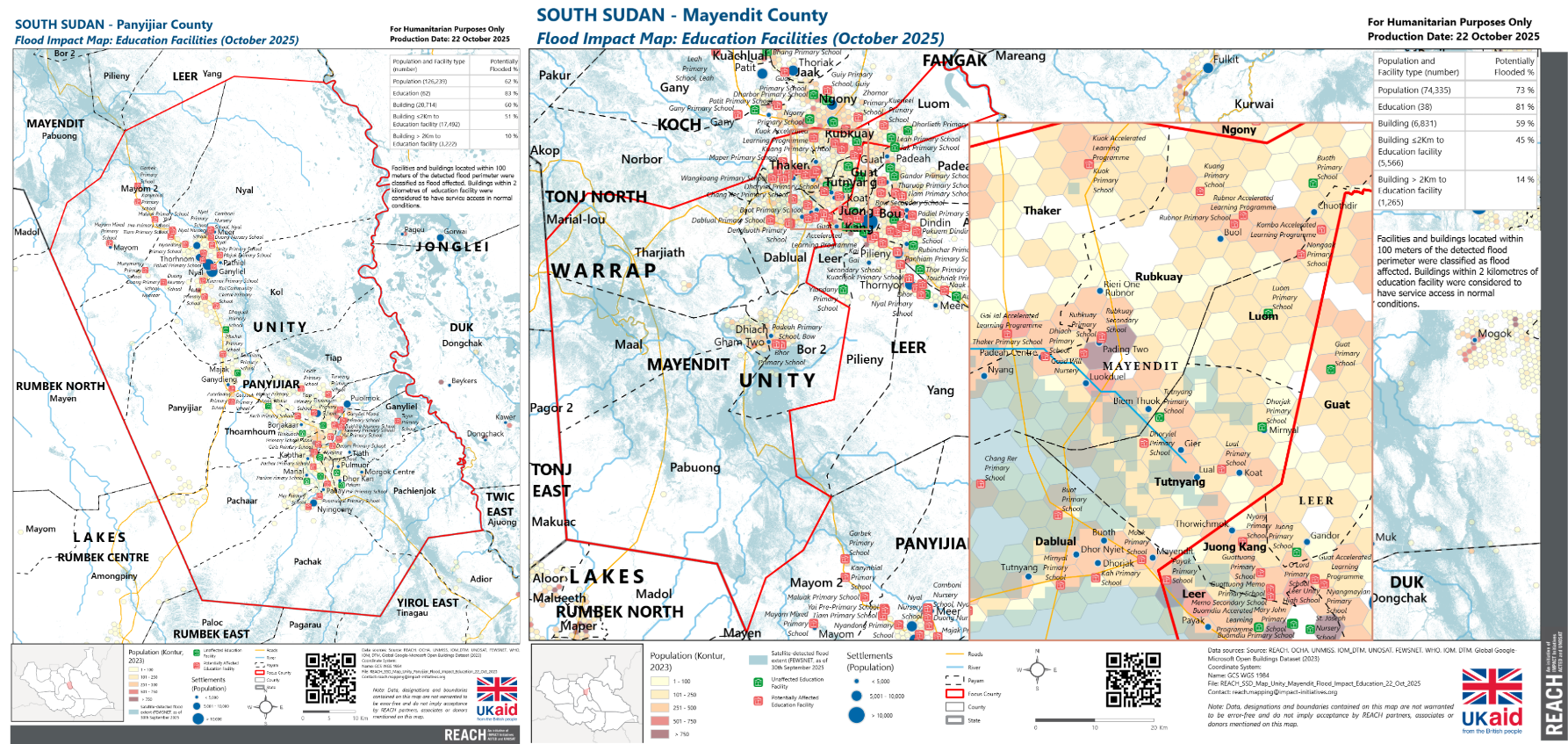
Education access is similarly constrained. Floods isolate households located far from education centers, preventing children from attending school. In Panyijiar and Mayendit, more than 80% of education facilities lie within flood-affected zones.
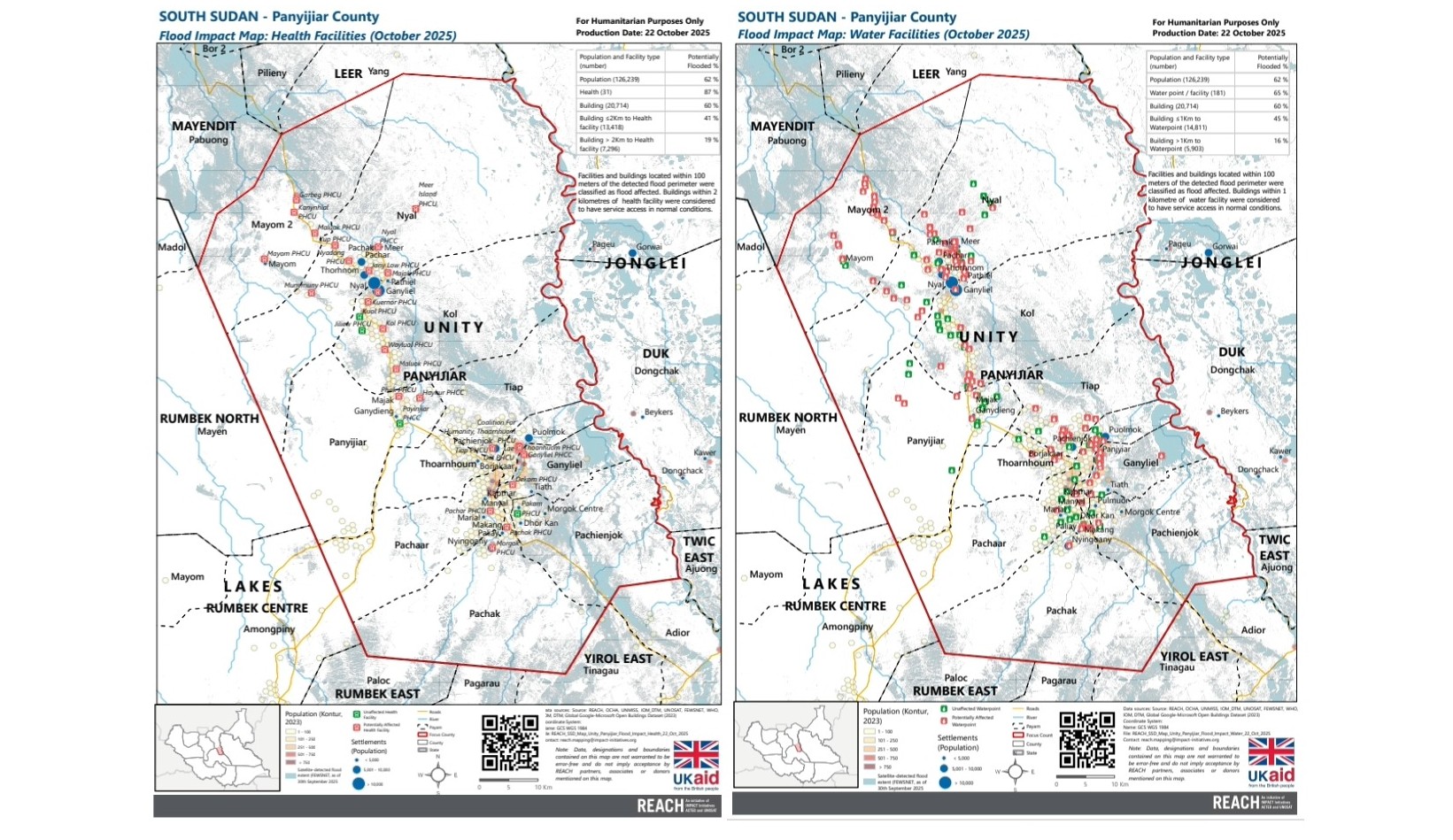
The health sector faces comparable strain. Panyijiar reports one of the highest levels of exposure, with 87% of health facilities affected. Additionally, almost 20% of the 12,536 flood-affected buildings are more than 2 km from the nearest health center. These conditions risk creating humanitarian hotspots, as cholera, malaria, and respiratory infections often surge during floods, while blocked routes prevent families from accessing timely treatment.
Water systems are no less at risk. Across the five counties, between 38% and 65% of water points fall within flood-affected areas. For remote communities, the consequences are severe: submerged water points often become unsafe or inaccessible, especially where floodwaters mix with stagnant pools, waste, or contaminated runoff. In Guit, 44% of the 4,286 flood-affected structures are more than 1 km from a functioning water point, leaving households doubly exposed to flooding and water scarcity.
The flood impact maps and geospatial analyses form part of IMPACT’s ongoing work in South Sudan and serve as essential tools for humanitarian planning. Building on IMPACT’s broader climate-resilience efforts, including last year’s flood emergency alert, these products help strengthen preparedness and mitigate the effects of floods across the country. The cumulative impact of successive climate shocks, including the large-scale floods from 2019 to 2022, has intensified both displacement and humanitarian needs. Floods not only damage homes and infrastructure; they also undermine access to essential services, often triggering a chain of disruptions that leaves communities increasingly isolated and exposed.
This research was supported by FCDO and made possible through IOM’s Village Assessment Surveys, which mapped all public infrastructure in the target counties. The reports for the counties included in this research were finalized in May 2025.
Access maps and briefs here for Panyijiar, Mayendit, Leer, Koch, and Guit counties.