


Despite remarkable progress in expanding access to education worldwide over the past 25 years, continuous education remains a privilege for many children caught in humanitarian crises. The lack of up-to-date data often makes this exclusion invisible.
As of December 2025, data collected in 14 crisis-affected contexts through Multi-Sectoral Needs Assessments (MSNAs)1 revealed that more than one third of school-aged children living in the surveyed areas were fully denied their right to education.
Universal access is far from achieved, and disparities across contexts are striking.
In Haiti, eight out of ten school-aged children were reported attending school, while in Sudan and Somalia fewer than four out of ten had this chance.2 Yet these figures mask the complexity within each context. In humanitarian contexts, data only reveal their true meaning when examined locally, alongside children’s characteristics and vulnerabilities. In Nord Kivu, Eastern Democratic Republic of Congo, a region scarred by decades of insecurity, 59% of school-aged children were reported to access education. But in some areas near Goma, such as Mweso this rate was reduced threefold. For education to fulfil its purpose, it cannot stop at primary school. Yet in Afghanistan, for the fourth consecutive year, girls have been purely denied education beyond the primary level. In most contexts studied, access also declines sharply as children grow older. In Eastern DRC3, 74% of primary school-aged children4 were enrolled, compared to just 43% of adolescents5.
Vulnerabilities deepen these gaps. In Lebanon, school attendance among Lebanese and Palestinian refugees from Syria children aged 6–11 was similar, but from age 15 onward, Lebanese children were more than twice as likely to remain in school.6
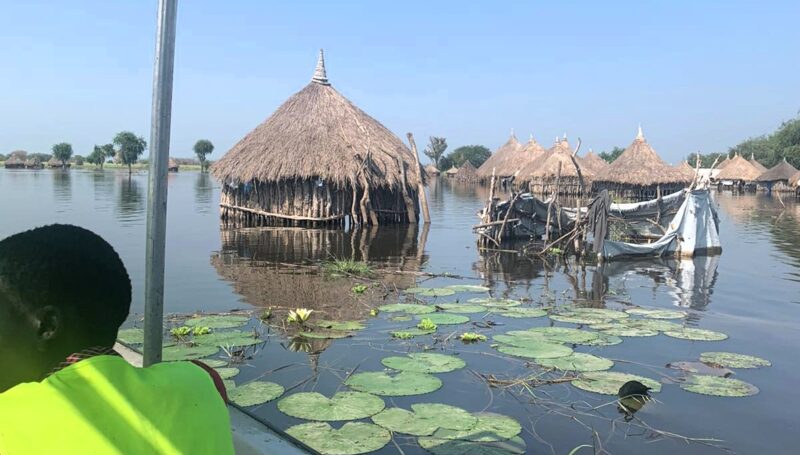
Education needs are also shaped by overlapping crises, calling for tailored and varied response approaches. In Alimbongo Zone de Santé, Nord Kivu, where scenes of violent clashes have intensified since 2024, 57% of in-school children experienced education disruptions during the year, both as their schools were either used as shelters and directly attacked.7 In South Sudan, in Jonglei State that is prone to flooding particularly during the season from May to October, 50% of in-school children’s education was disrupted by natural hazards. In parallel, the escalation of hostilities since March 2025 has fuelled important new waves of displacement, and almost one child out of three has seen their education disrupted by displaced populations using school facilities as shelters.
In specific locations, the speed at which conflict disrupts education pathways is particularly striking. In Port-au-Prince, Haiti, 12% of in-school children’s education was interrupted at some point during the 2023-2024 school year due to schools occupied by armed groups. In 2025, more than one in three (36%) faced disruption from direct attacks.
Chocks may trigger lasting impacts on learners’ education trajectories. They often lead to late entry into school and higher rates of grade repetition. Over-age learners, i.e. children attending grades beyond the expected age represent a significant share of students in crisis contexts. In Port-au-Prince, 19% of primary school-aged children were at least two years older than expected for their grade in 2024. By 2025, this figure had surged to 31%. Similar patterns were seen in later stages of education in Port-au-Prince. In countries like the Central African Republic and South Sudan, recurring crisis and structural issues exacerbate these delays.
The roots of “education in emergencies” lie at the intersection of humanitarian response and global development. Communities themselves highlight this duality when asked how education can be improved.
In Haiti, 45% of households called for more schools, 35% for financial support to offset education costs or lost income, 30% for school supplies, and 22% for better teacher pay and regularity. In Port-au-Prince, 10% emphasized the need for safer schools and routes to school. In Ethiopia, nearly half of households requested school supplies, more than a third asked for improved infrastructure and new schools, and one in five highlighted the need for teacher training on pedagogy.
As the humanitarian and development landscape shifts amid shrinking resources8, integrated action is more urgent than ever. Bridging humanitarian relief and long-term development requires new ways of working with communities, coordinated efforts and interlinked activities. Data play a critical role in this process. REACH remains committed to collecting and analysing data that shed light on how age, gender, legal status, and disability shape children’s educational opportunities, to inform appropriate interventions.
This article is the first in a series that will further explore children needs and its intersecting vulnerability factors.
1 1 As of December 2025, the information was collected on over 341,000 children aged between 5 and 17 years old in 14 crisis-affected contexts. MSNAs collect data at individual level, on children aged from 5 to 17 years old. In 2025, households were asked to report on the educational status of their children during the 2024-2025 school year.
2 84% of school-aged children in Haiti were reported to have attended school at any time, vs 39% in Somalia and 35% in Sudan
3 Provinces of Nord Kivu, Sud Kivu and Ituri
4 6 to 11 years old
5 14 to 17 years old
6 79% of the Lebanese children in secondary school age (15-17 y.o.) are attending school, at any school cycle vs 34% of their Palestinian refugees from Syria counterparts
7 Similar trends were noted for other areas affected by clashes in Nord Kivu, such as Lubero. Attack on education in MSNAs in 2025 was defined as “the school being occupied by armed groups, or the school being hit by munitions/burning or theft/looting”
8 Hyper-prioritisation has led to a 33% drop in requests for education funding in crises and a 43% drop in people targeted for assistance, with countries like Chad, Sudan and Haiti seeing cuts of up to 90%