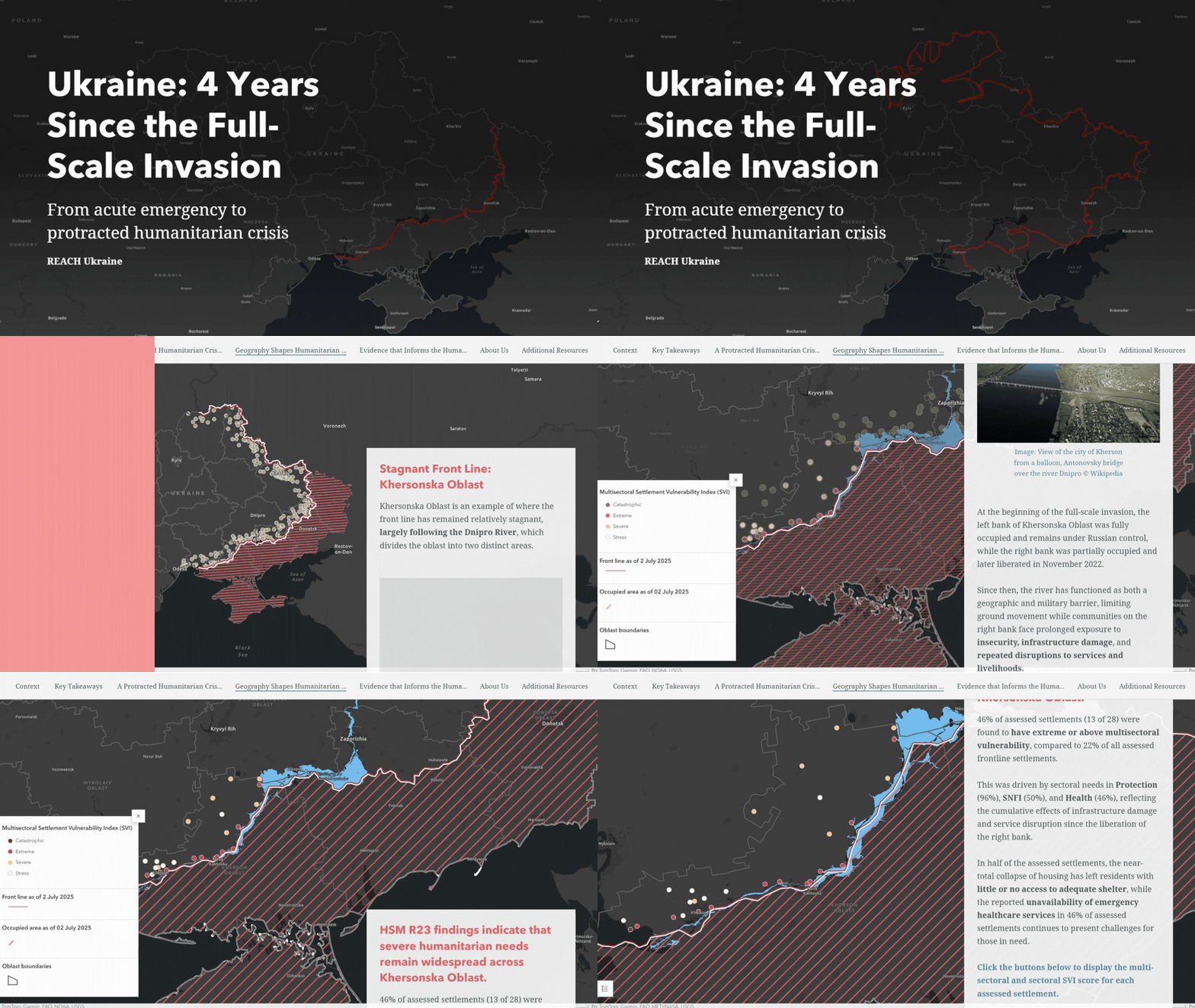




24 February 2026 marks four years since Russia’s full-scale invasion of Ukraine. Alongside active hostilities in frontline areas, intensified missile and drone strikes continue to affect communities across all regions of the country. Ongoing attacks on civilian and critical infrastructure have disrupted essential services, deepening the humanitarian crisis. As the war persists and evolves, so too do humanitarian needs, which are increasing in severity and complexity.
IMPACT has launched a new interactive StoryMap examining how humanitarian needs in Ukraine have evolved since 2022 — and how geography, conflict dynamics, and structural vulnerabilities continue to shape humanitarian risk across the country. By drawing on evidence from the Multi-Sector Needs Assessment (MSNA), Humanitarian Situation Monitoring (HSM), Joint Market Monitoring Initiative (JMMI), and frontline assessments, the StoryMap offers a longitudinal view of how humanitarian needs have changed across sectors and regions.
A protracted humanitarian crisisFour years after the full-scale invasion, humanitarian needs in Ukraine remain widespread and entrenched, reflecting a shift from an acute emergency to a chronic, multi-sectoral humanitarian crisis – especially in frontline and border areas – at a time when humanitarian resources are increasingly constrained. Over time, initial shocks related to large-scale displacement, loss of income, and disruption to essential services have compounded into more protracted challenges, leaving many households navigating multiple, interconnected needs across sectors. | 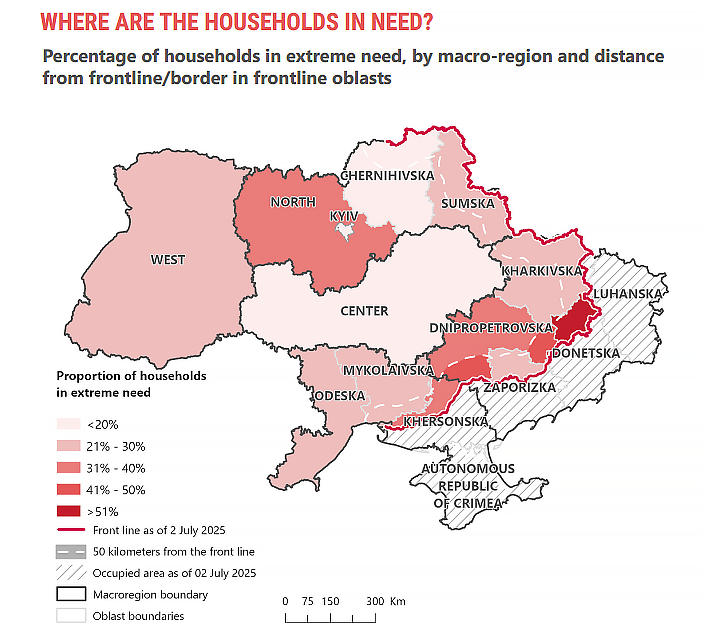 |
Geography shapes humanitarian risk
Geography shapes humanitarian risk. Proximity to the front line or border amplifies the severity of needs while constraining access and service delivery. The geographic dynamics of the front line—including whether it remains relatively stagnant or continues to move in a particular area—play a key role in shaping both humanitarian needs and the ability of responders to reach affected populations.
At the same time, widespread humanitarian needs persist well beyond frontline areas, driven by nationwide shocks and structural vulnerabilities. While rural households remain particularly vulnerable compared to urban households, repeated attacks on critical infrastructure and economic pressures continue to affect urban households across the country.
Complimentary evidence remains essential to the response
Four years into the full-scale invasion, research systems continue to support humanitarian decision-making in Ukraine. Robust, complementary evidence is essential for enabling the informed prioritisation and delivery of humanitarian assistance and reduces uncertainty in a dynamic, complex crisis.
➞ Access Ukraine’s analytical overview of humanitarian needs 4 years since the start of full-scale invasion here