

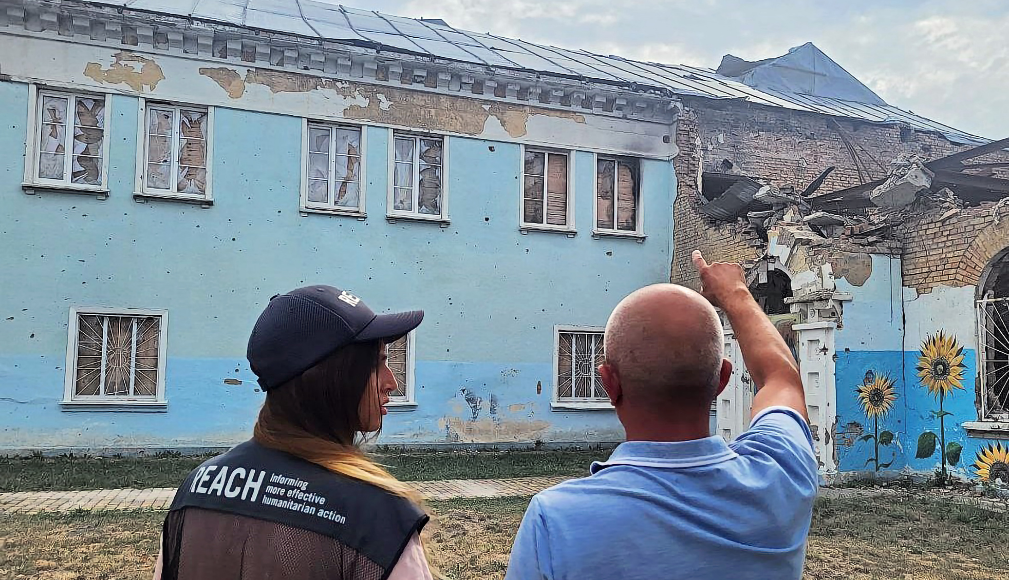

On 24 February 2025, three years into the full-scale invasion, Ukraine continues to face high levels of persistent humanitarian need, and disruptions to essential services linked to ongoing attacks on critical infrastructure. At the same time, humanitarian funding is decreasing.
Amid continued uncertainty and dwindling resources, many of both the 3.7 million internally displaced people (IDPs) within Ukraine, and the 6.9 million Ukrainians living abroad as refugees, are facing tough choices about where to live.
Humanitarian needs and returns in frontline areas:
The 2024 Multi-Sector Needs Assessment (MSNA) estimated that returns to areas within 30 km from the front line make up approximately one-third (i.e. 1.6 million people) of all IDP returns since February 2022. In the first 6 months of 2024, despite the worsening of the security situation, returns to the 30 km zone reportedly made up 11% of all returnee households to this area. Half of the returning households in this area reported having children.
In 2024, in these frontline areas and areas along the border with the Russian Federation, households continued to face the most extreme needs. This was especially the case in Khersonska, Zaporizka, Donetska, Kharkivska and Sumska oblasts, according to the MSNA.
Across the country, IDP (45%) and returnee (35%) households have been classified as experiencing extreme humanitarian needs compared to 25% among non-displaced households.
Read more in our brief: What the Data Says About IDP Returns to Unsafe Areas
Reasons for returns: Spotlight on Ukrainian refugees
IMPACT’s Longitudinal Survey of Ukrainian Refugees has been speaking regularly to the same sample of people who left the country in the early days of the full-scale invasion. Among this group, around 27% have now returned from abroad to areas classified under Ukrainian law as territories of active or possible hostilities—a rate roughly comparable to IDP returns to areas close to the frontline.
While it’s well known that many of these areas continue to be unsafe or unstable, many continue to make the journey back. For people with the lived experience of forced displacement, the pursuit of stability often leads to seeking it in the most unstable environments.
The case studies of four different women interviewed regularly IMPACT over the past 2.5 years illustrate how factors such as the slow erosion of living conditions and resources, multiple compounding shocks, and the emotional need to return to familiar people and places can all lead—separately or in tandem—to decisions to return.
Explore our interactive StoryMap, in English or in Ukrainian
People’s decision to return is shaped by a complex interplay of factors, including family ties, a sense of home, and economic considerations. It may also be influenced by the presence of humanitarian or state assistance in both areas of displacement and return.
As the conflict drags on, policy and programming should work to support the resilience and agency of displaced Ukrainians, avoiding scenarios where people feel forced to return to unsafe areas, and supporting them with relevant assistance, protection and information regardless of the choices they make.
Scroll down to read all the stories:
Unsafe returns: what makes refugees return to Ukraine and settle in the frontline areas of the country?
Read our situation overview in English or in Ukrainian
This work was completed with support by the European Union.