



REACH_AFG_Map_DamageAssessment_Khost_Tani_EarthquakeDamageDensity_02July2022_A3
PDF2.5M
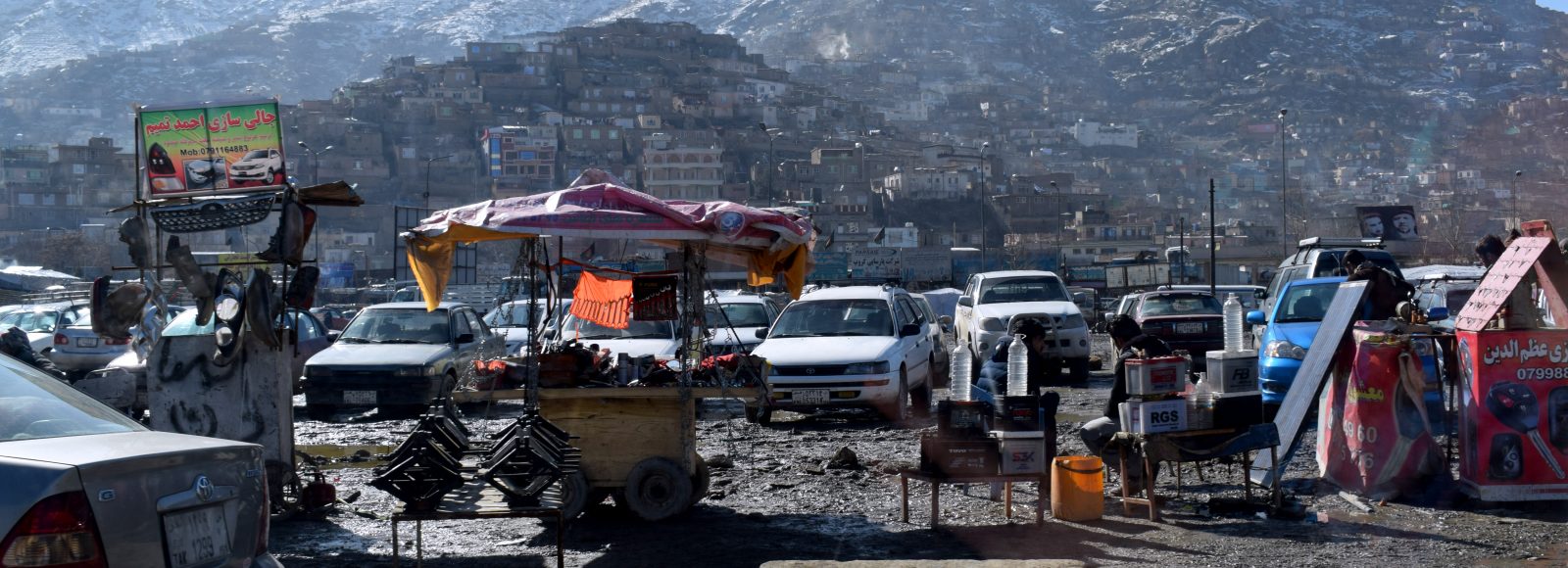
Afghanistan remains one of the world’s largest humanitarian crises, with the 2026 Humanitarian Needs and Response Plan outlining that 21.9 million Afghans remained in need of humanitarian assistance. Compounding decades of conflict, natural hazards including flooding, drought, and earthquakes are occurring with increasing frequency. Annual average temperature rises in the country exceed the global average, with the effects of climate change leading to drought and negative effects on agricultural production.
IMPACT Initiatives has been present in Afghanistan since 2016, through its REACH and AGORA Initiatives. The work of REACH seeks to inform the humanitarian response, as part of annual planning, filling information-gaps, and monitoring trends and developing needs, including through our Joint Market Monitoring Initiatives (JMMI). The REACH Initiative is also increasingly informing Basic Human Needs (BHN) actors in their efforts to increase effective nexus and early recovering programming.
Through our AGORA initiative, alongside Acted, our teams have worked with communities to understand their priorities, explore how pastures and irrigation systems are managed and operated within communities, and assessing groundwater management and use.
Given the specific challenges in Afghanistan, our work is committed to engaging Afghan females and understanding their needs and priorities.
You can find many of our research products and datasets on the Resource Centre or to contact us directly, please email [email protected]
Global temperatures are rising, and they are doing so at an increasing pace. According to UNEP’s recent Limiting Overshoot report, global warming may reach 1.5°C above pre-industrial levels around the end of...
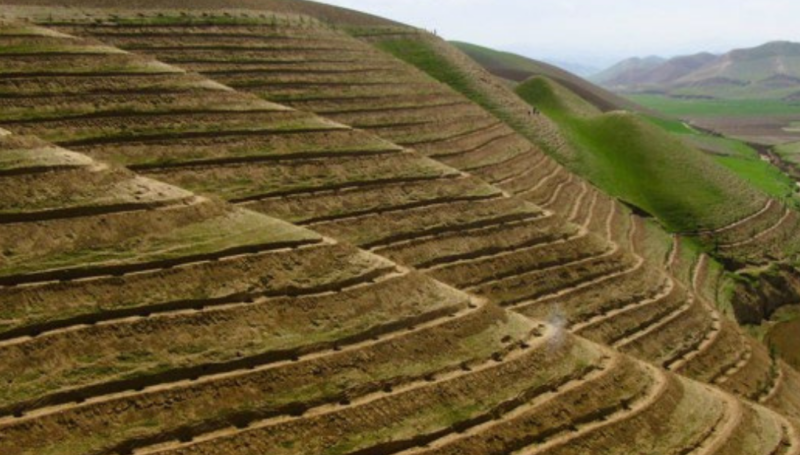
According to a 2018 World Bank report, roughly 70% of the population of Afghanistan live in rural areas where the majority of livelihoods rely on agriculture and livestock, signaling that...
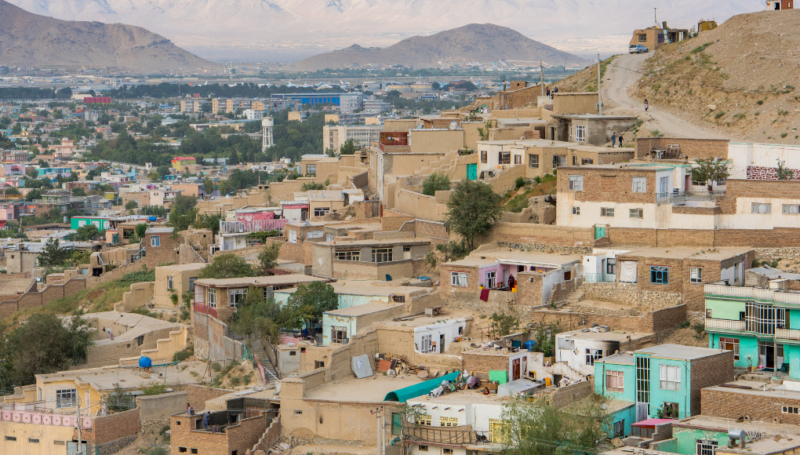
In Afghanistan, flooding isn’t just an occasional inconvenience—it’s a recurring crisis that disrupts lives, devastates crops, and threatens food security. The brief released by REACH in May 2024, sheds light...
REACH_AFG_Map_DamageAssessment_Khost_Tani_EarthquakeDamageDensity_02July2022_A3
PDF2.5M
REACH_AFGHANISTAN - COMMUNITY RESPONSE PLAN (CRP) WORKSHOP FACILITATOR GUIDE – JULY 2022
PDF562.6K
REACH Afghanistan Khost Earthquake HHI KII Dataset, July 2022
XLSX2.6M
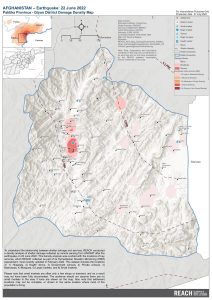
REACH_AFG_Map_DamageAssessment_Paktika_Giyan_EarthquakeDamageDensity_02July2022_A3
PDF2.4M
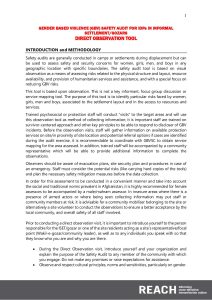
REACH_AFGHANISTAN - GENDER BASED VIOLENCE (GBV) SAFETY AUDIT– JULY 2022
PDF334.5K
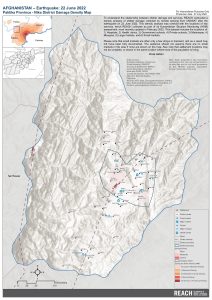
REACH_AFG_Map_DamageAssessment_Paktika_Nika_EarthquakeDamageDensity_02July2022_A3
PDF2.1M
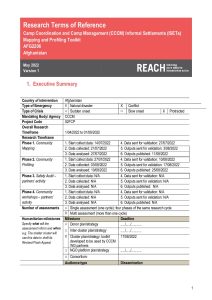
REACH – Afghanistan - TOR_Camp Coordination and Camp Management (CCCM)_ May 2022
PDF648.2K
Afghanistan Joint Market Monitoring Initiative (JMMI), Dataset – July 2022
XLSX122.5K
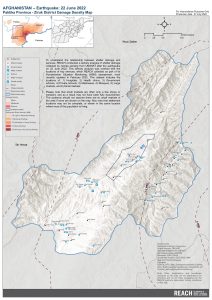
REACH_AFG_Map_DamageAssessment_Paktika_Ziruk_EarthquakeDamageDensity_02July2022_A3
PDF2.5M
REACH Afghanistan - Earthquake Damage Assessment - Factsheet, (July 2022)
PDF1.9M
REACH Afghanistan - Earthquake Damage Assessment - Presentation, (July 2022)
PDF1.1M
Afghanistan Humanitarian Situation Monitoring (HSM) Data Analysis Plan July 2022
XLSX55.9K
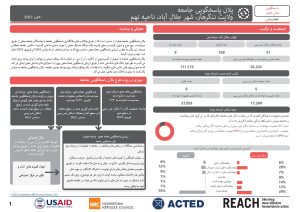
REACH Afghanistan Community Response Plan of PD9, Jalalabad city (2022-06-06-2022-06-30) Dari
PDF8.0M
REACH Afghanistan Community Response Plan of PD5, Kunduz city (2022-06-06-2022-06-30)
PDF1.9M

REACH Afghanistan Community Response Plan of PD8, Jalalabad city (2022-06-06-2022-06-30) Dari
PDF8.0M
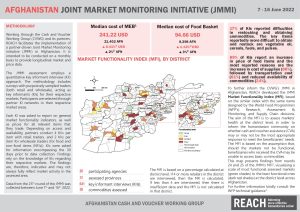
Joint Market Monitoring Initiative (JMMI) in Afghanistan, Factsheet – June 2022
PDF13.9M