




REACH Sudan Joint Market Monitoring Initiative (JMMI) December 2023
XLSX248.7K
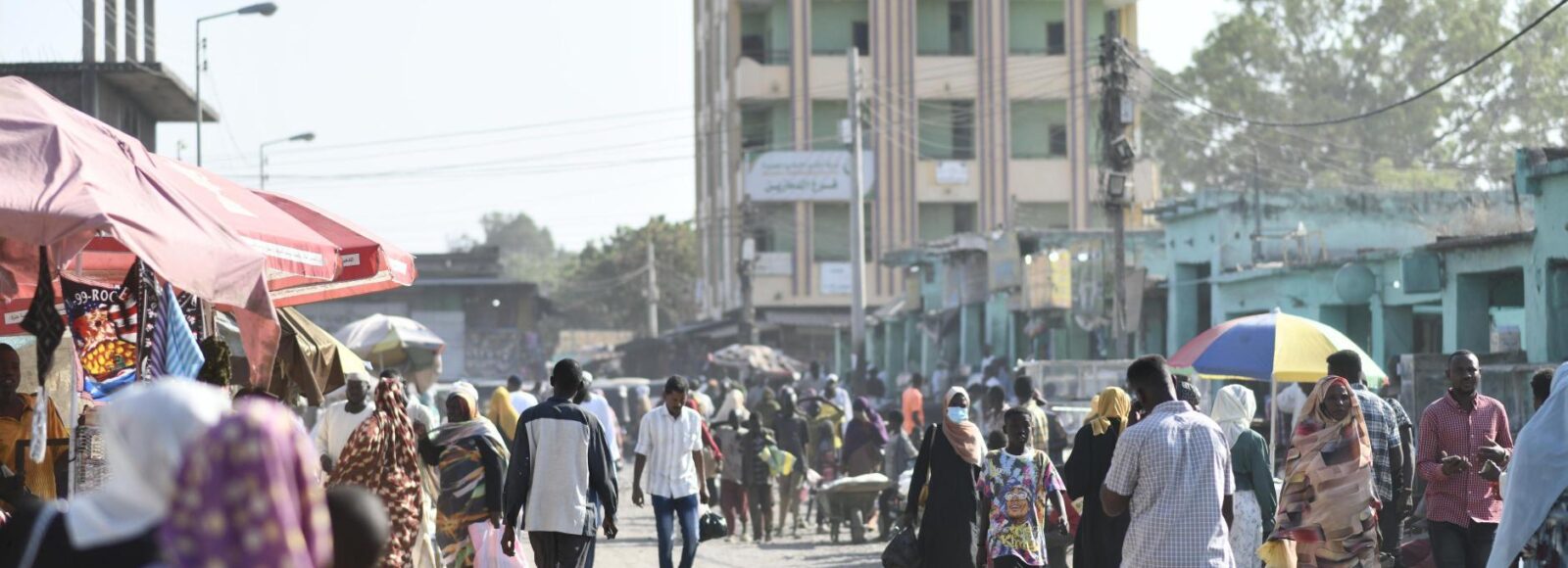
Three years into the conflict, Sudan remains the world’s largest humanitarian and displacement crisis with over 33 million people in need of humanitarian assistance in 2026, almost two third of the population. The conflict has triggered large-scale displacement, economic collapse, disruption of essential services and widespread food insecurity and protection risks. Several distinct sub-crises have emerged, from an acute humanitarian catastrophe in Darfur and Kordofan, to fragile recovery in the central corridor, emerging threats in the southern states, and growing cumulative strain on the eastern corridor. Across all four contexts, the diversity of drivers, needs, and recovery pathways makes differentiated, locally led area-based evidence and programming essential.
To support humanitarian and development actors address this unprecedented level of life-threatening needs while also pushing for sustainable interventions that support community resilience, IMPACT’s work focuses on three objectives:
1) Informing evidence-based strategic planning and prioritization of the response at national level by identifying the number of people in need ahead of the humanitarian planning cycle, conducting sectoral needs assessments, and monitoring prices and market condition to guide cash programming;
2) Strengthening subnational information systems in the context of the emergencies with a focus on supporting new Area Based Coordination (ABC) structures;
3) Supporting localized, sustainable and adaptive programming to enable early recovery through livelihood assessments, climate analyses and a cross-cutting localization efforts aimed at integrating local responders into key information and decision processes.
| One Conflict, Four Crises: Sudan’s Humanitarian Landscape After Three Years of War April 2026 Three years of conflict have produced distinct sub‑crises across Sudan, ranging from acute humanitarian catastrophe in Darfur and Kordofan, to fragile early recovery in the central corridor, emerging risks in the southern states, and accumulating strain in the east – making differentiated, locally informed responses essential. | 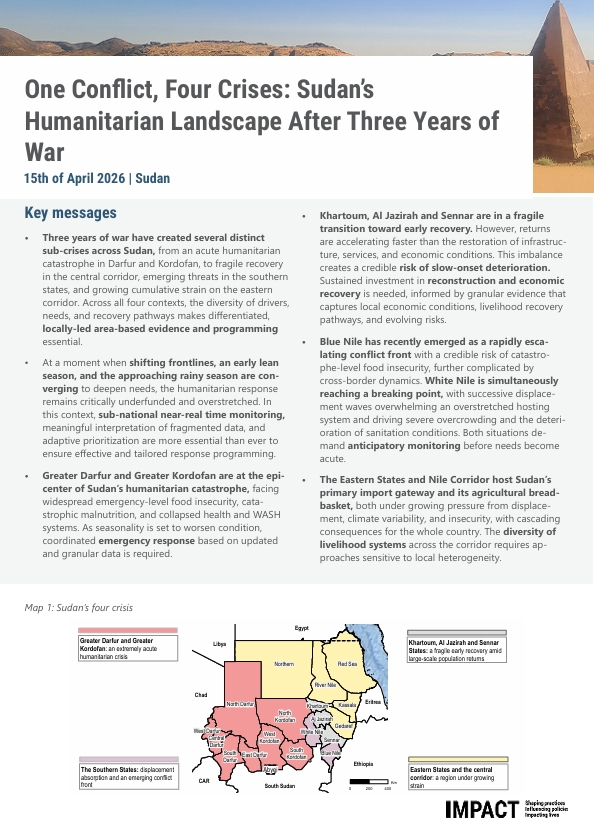 | |
| Sudan Climate Analysis in The Context of Conflict December 2025 Climate variability in Sudan has intensified, with alternating cycles of drought and flooding. As a result, key agricultural regions face increasing environmental stress, threatening Sudan’s food production. Together climate shocks and conflict undermines agricultural systems and rural livelihoods urging climate‑ and conflict‑adaptive programs that restore production, safeguard pastoral systems, and stabilize markets. Read full analysis and access flood susceptibility assessment dataset | 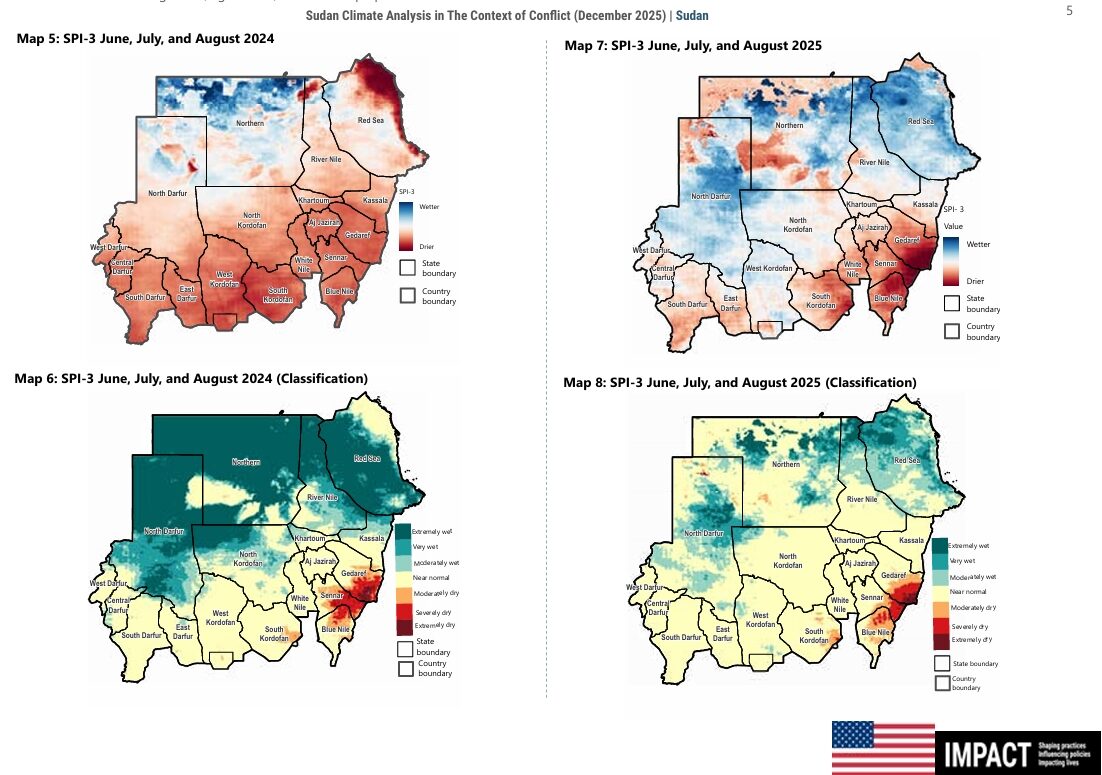 |
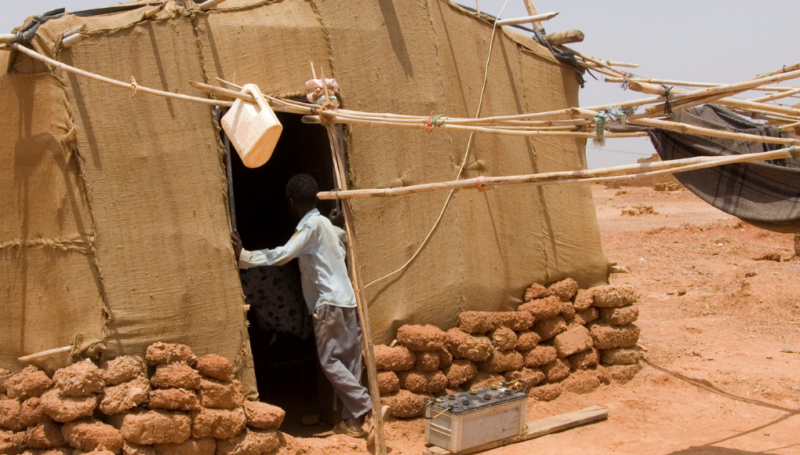
The ongoing conflict in Sudan has displaced thousands of families, many of whom have sought refuge in Ed Damazin, Blue Nile State. To understand their priorities and intentions, IMPACT...
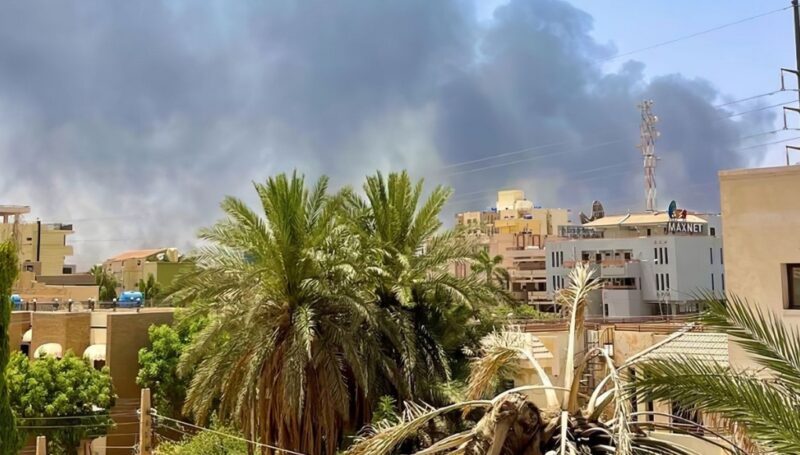
The release of the 2024 Sudan Humanitarian and refugee response plan last Wednesday underscores the critical situation in the country. As Sudan nears 10 months since the conflict began, ongoing...
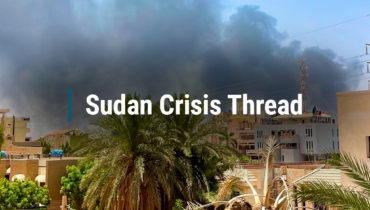
Clashes between the Sudanese Armed Forces (SAF) and the Rapid Support Forces (RSF) broke out on 15 April 2023. Fighting has been concentrated in densely populated urban centres, starting in...
REACH Sudan Joint Market Monitoring Initiative (JMMI) December 2023
XLSX248.7K
REACH East Darfur, Sudan, H2R assessment, September 2023
PDF729.4K
REACH West Darfur, Sudan, H2R assessment, September 2023
PDF796.0K
REACH Sudan Cross-border Rapid Assessment Presentation CAR juin 2023 FR
PDF848.3K
REACH, Sudan, Joint Market Monitoring Initiative (JMMI), ToR, July 2023
PDF786.2K
REACH - Sudan - Cross-border assessment - Regional - Situation Overview - August 23
PDF884.4K
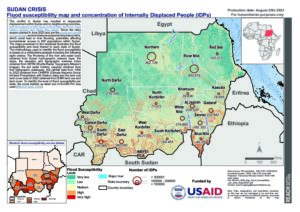
Flood susceptibility map and concentration of Internally Displaced People (IDPs)
PDF7.7M
100 days into the conflict in Sudan: An emerging picture of the humanitarian impact
PDF3.1M
REACH - Cross-border assessment - Refugee households from West Darfur - Situation Overview - July2023
PDF353.9K
Sudan - Cross-border assessment - Chad - Flood Risk and Satellite Imagery - July 23
PDF793.9K
REACH advocacy brief - Sudan crisis at two months
PDF878.3K
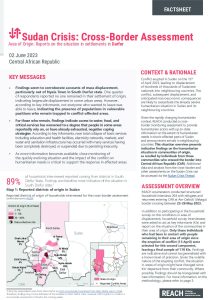
REACH Sudan – Cross-border Rapid Assessment - Darfur AoK - June 2023
PDF820.4K
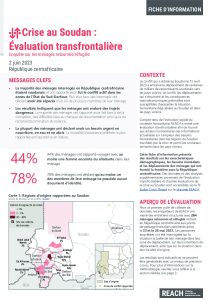
Soudan - Evaluation transfrontalière - Enquête sur les ménages réfugiés et retournés en RCA - factsheet - juin23
PDF833.5K
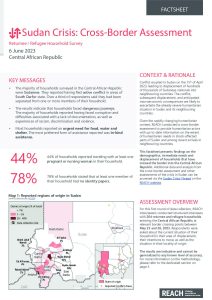
Sudan - Cross-border assessment - Refugee / Returnee households in CAR - Factsheet - June 23
PDF736.4K
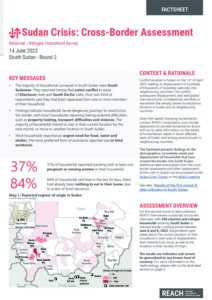
REACH - Cross-border assessment - Refugee/returnee households in South Sudan - Round 2 - Factsheet - June 2023
PDF456.6K
Sudan - Cross-border assessment - Darfur AoK Round 2 - Factsheet - June 23
PDF291.8K