

Central African Republic

| French translation available |
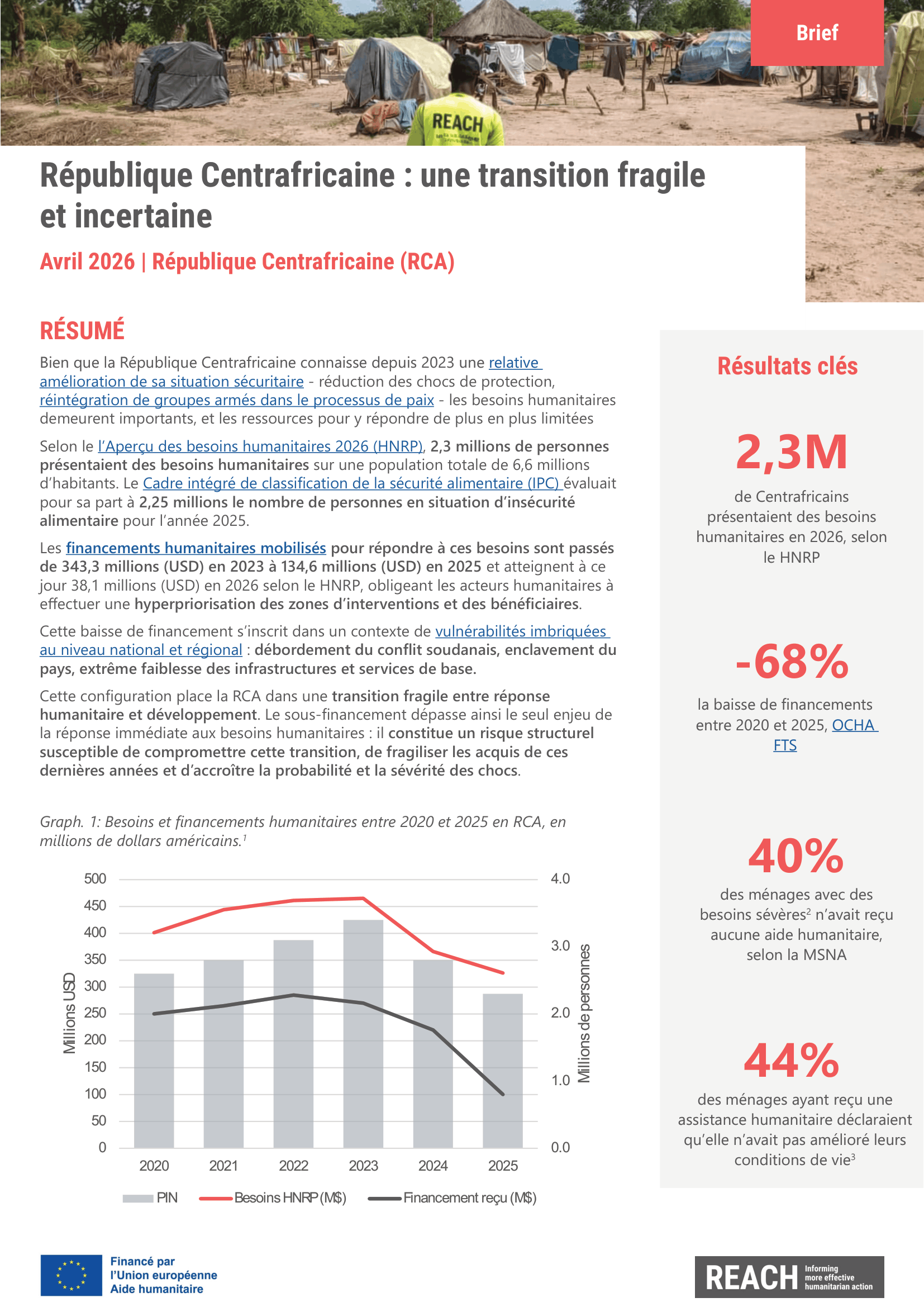
The Central African Republic (CAR) has experienced a protracted crisis for over a decade, marked by armed conflict, violence against civilians, and recurring climate shocks. While relatively improved security conditions in recent years have enabled a gradual transition from humanitarian response to development programming, humanitarian needs remain critically high. According to the 2026 Humanitarian Needs and Response Plan (HNRP), 2.3 million people are in need of humanitarian assistance. Meanwhile, the 2025 Integrated Food Security Phase Classification (IPC) estimates that 2.25 million people are experiencing food insecurity. In addition, the 2025 Multi-Sector Needs Assessment (MSNA), conducted by IMPACT through its REACH initiative, found that 42% of households in need are facing severe needs. |
|
IMPACT has been present in CAR since 2015 through its REACH initiative, working to address humanitarian information and data gaps. REACH produces multisectoral analyses, including nationwide Multi-Sector Needs Assessments (MSNAs), and supports the Rapid Response Mechanism (RRM) to inform emergency humanitarian interventions.
In addition, REACH contributes to market monitoring through the Joint Market Monitoring Initiative (JMMI), enabling the analysis of price trends and supporting evidence-based cash assistance responses. Through the AGORA initiative, IMPACT also implements area-based approaches that strengthen coordination among humanitarian actors, local authorities, and communities, while promoting the meaningful inclusion of affected populations’ perspectives in humanitarian planning.
Research Highlights
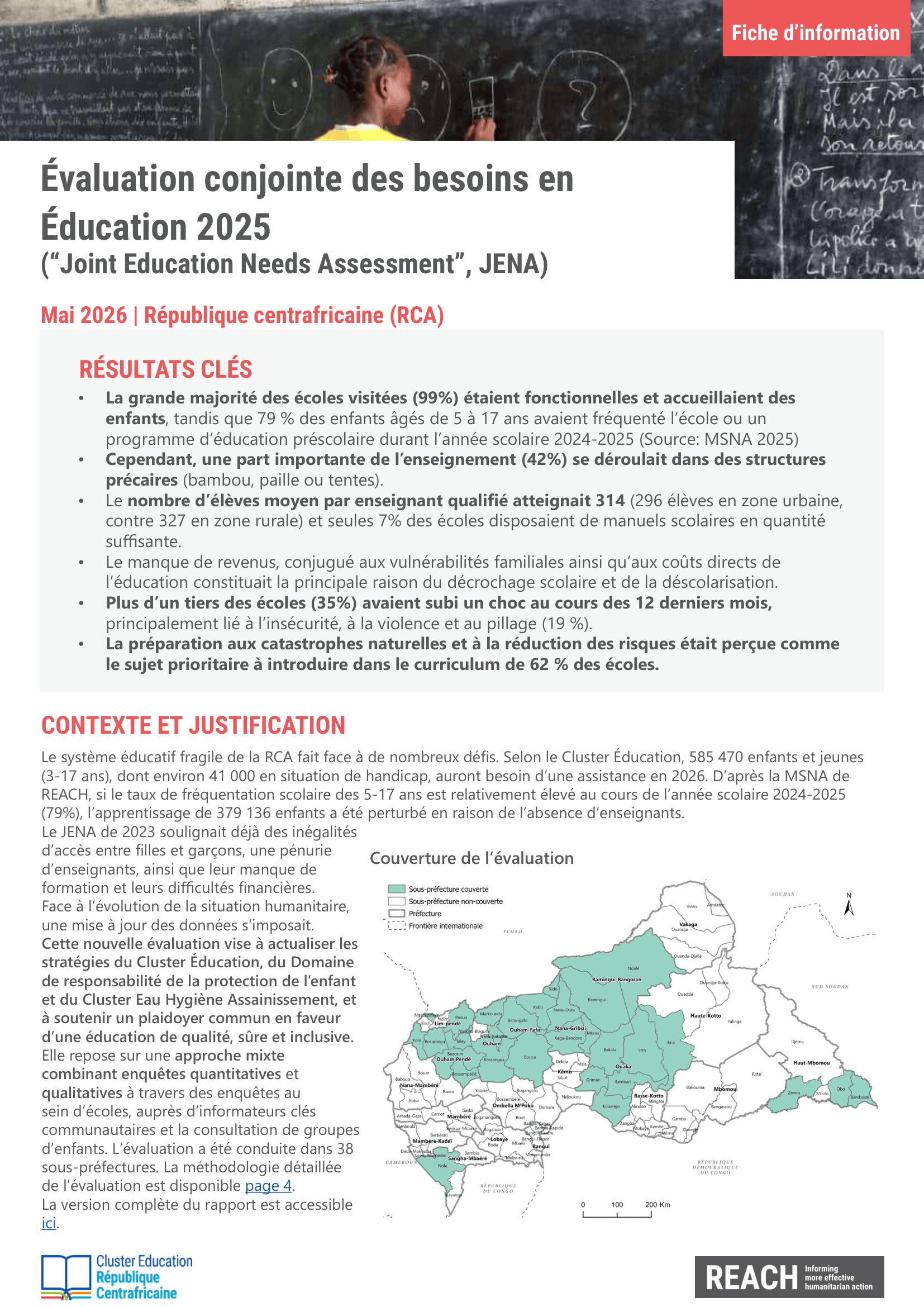
| Joint Education Needs Assessment 2025 May 2026 Political, security, and humanitarian crises continue to disrupt education across the country. In collaboration with the Global Education Cluster, humanitarian partners, national authorities, and local communities, IMPACT, through its REACH initiative, conducted the 2025 Joint Education Needs Assessment (JENA). The assessment was carried out across 38 sub-prefectures of the Central African Republic and drew on school-level surveys, interviews with community key informants, and consultations with groups of children to provide a comprehensive analysis of education needs. Key Findings:
|  | |
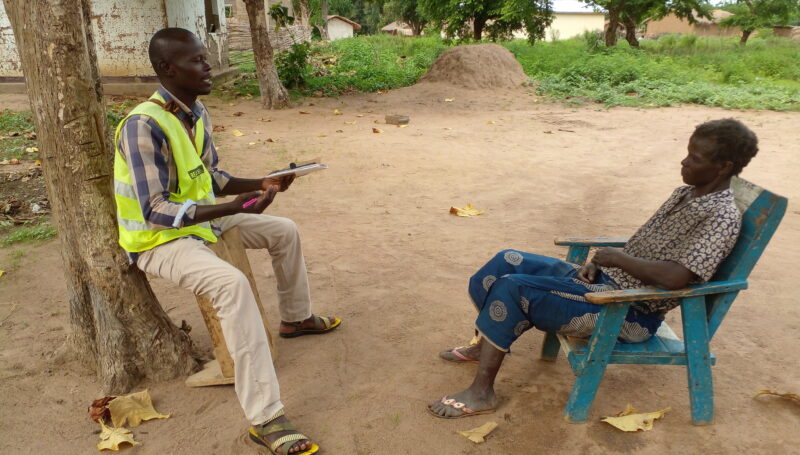
Central African Republic | 2024 Multi-Sectoral Needs Assessment: Key Findings and Importance
The 2024 Multi-Sectoral Needs Assessment (MSNA) in the Central African Republic (CAR) delivers critical insights into the diverse and pressing needs of communities across the country. Conducted in 74 sub-prefectures,...
Accountability & Inclusion Thread
Launch Statement Promoting a people-centred aid system: IMPACT’s commitment to producing community-driven evidence for humanitarian decision making In recent years, there has been growing momentum around putting people and communities...
Climate Watch: Data on Climate-Related Risks in Vulnerable Contexts
IMPACT Initiatives, notably via its REACH, AGORA, and PANDA initiatives, is increasingly committing research efforts to inform the aid community on how to tackle climate risk. The objective? To identify...