

Mali
Country Overview
| French translation available |
Since 2012, political instability and armed conflict have driven Mali into a protracted humanitarian crisis characterised by mass displacement, food insecurity, economic fragility and recurrent climate shocks. In 2026, renewed violence and the blockade of fuel supplies imposed by non-state armed groups continue to disrupt access to markets, essential services and humanitarian assistance.
According to the 2026 Humanitarian Needs and Response Plan, 5.1 million people require humanitarian assistance. Mali has more than 414,000 internally displaced people and hosts over 317,000 refugees and asylum-seekers, primarily from Burkina Faso and Niger (UNHCR, August 2026). REACH’s 2025 MSNA further highlights the scale of needs: 83% of households have humanitarian needs, compared with 75% in 2024, an increase of eight percentage points, primarily driven by worsening shelter needs.
IMPACT deployed its REACH initiative to Mali in 2012, in partnership with the Global Shelter Cluster, to support needs assessments and information management. Since resuming operations in 2019, IMPACT has produced data and analysis to inform humanitarian planning, prioritisation and response adaptation.
Its work includes the Multi-Sector Needs Assessment (MSNA), conducted in collaboration with national authorities, OCHA and humanitarian partners. The assessment analyses needs severity, geographical disparities and vulnerabilities across population groups. IMPACT also contributes to joint market monitoring, information management for the Rapid Response Mechanism (RRM), and acute needs analysis. These activities provide complementary evidence to help humanitarian actors determine where to intervene, which populations to prioritise and which response modalities to use.
Research Highlights
Multisectoral Needs Assessment — 2025 MSNI BulletinNovember 2025 Based on the 2025 MSNA, the Multisectoral Needs Index (MSNI) bulletin provides an overview of the severity and distribution of needs across geographic areas and population groups. It highlights that 83% of households are in need and provides a common evidence base to inform humanitarian planning, identify priority populations, and support sector-specific analyses. | 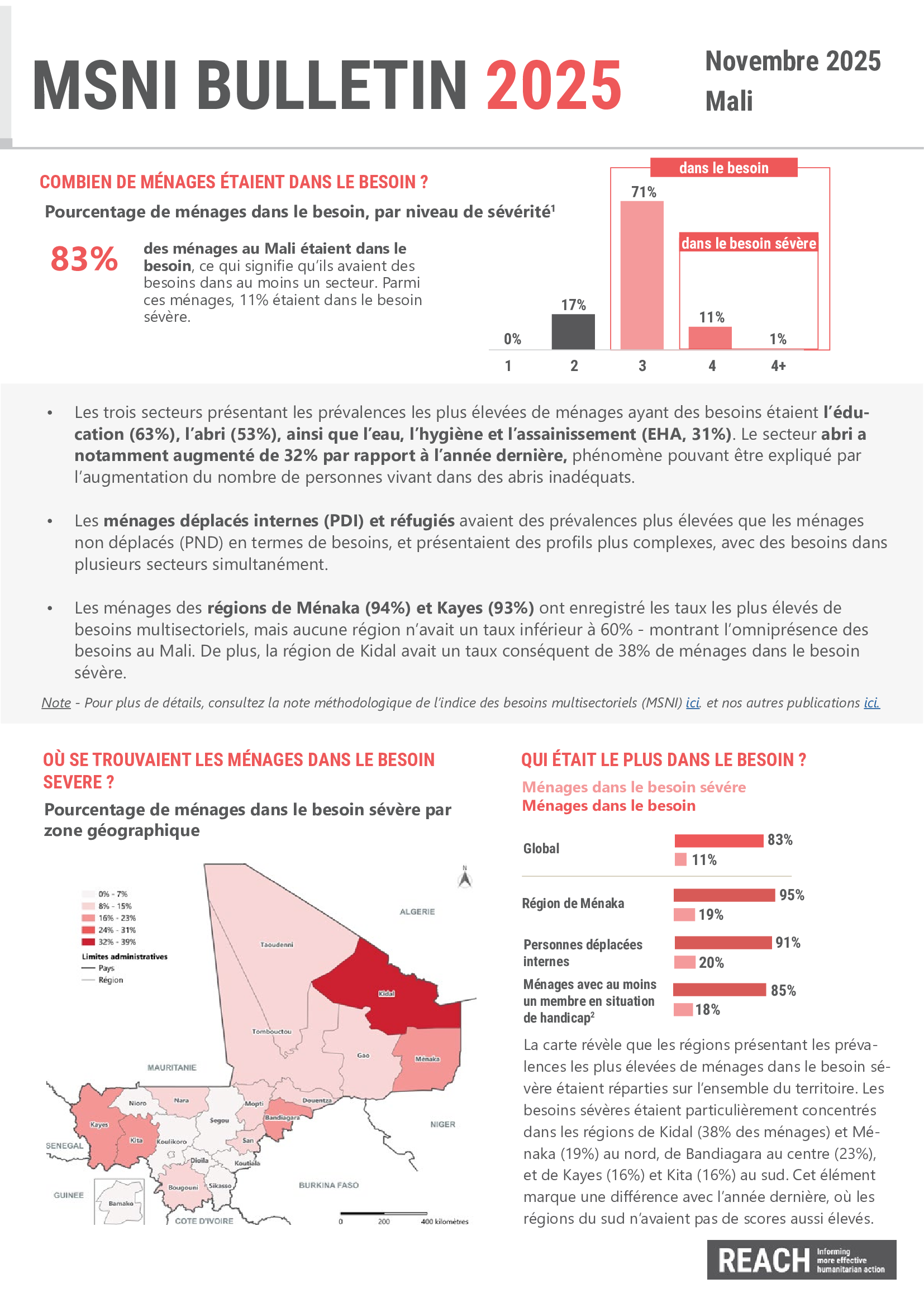 | |
What is the Acute Needs Analysis (ANA)?July – October 2025 The ANA is a humanitarian research pilot project designed to identify populations facing urgent, life-threatening needs. It seeks to bring these populations to the attention of humanitarian decision-makers—especially in contexts where information is scarce or fragmented. All analysis is conducted by dedicated, country‑based analysts with deep contextual expertise, ensuring robust support for humanitarian prioritization across and within crises. | 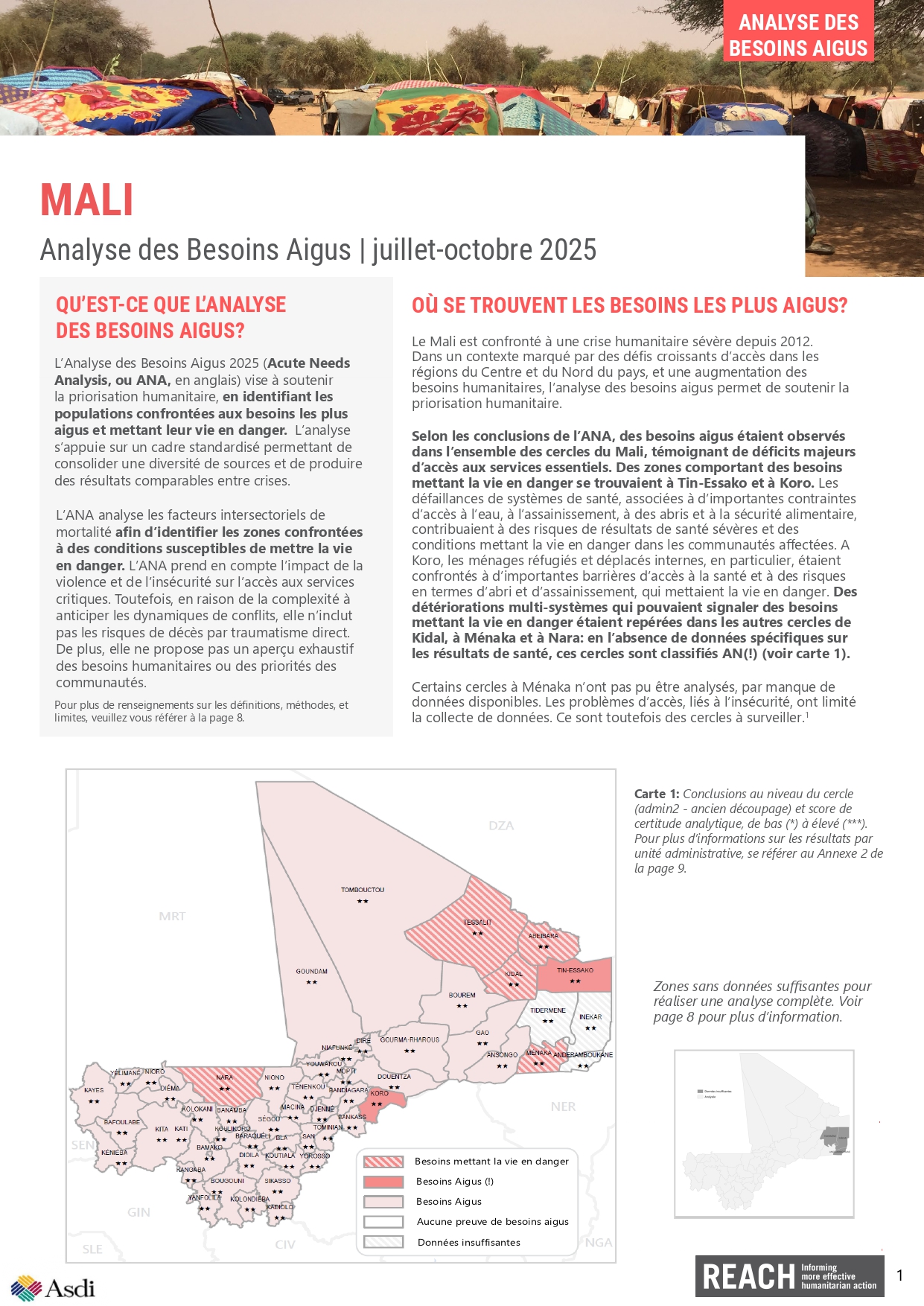 |
Related News
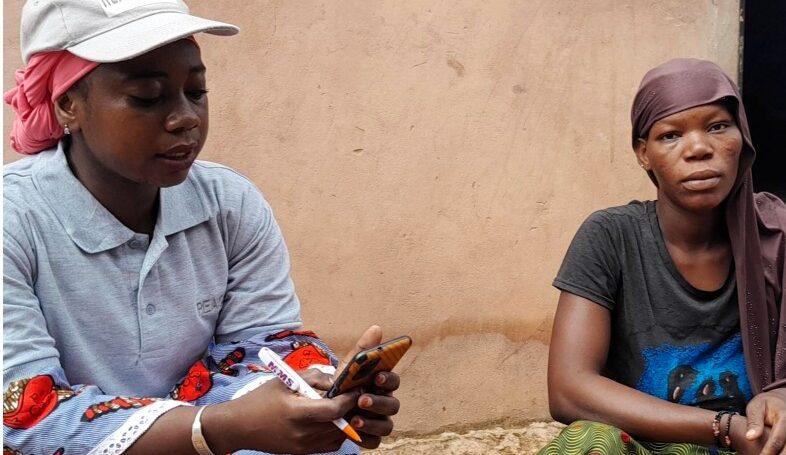
Mali MSNI Bulletin 2025 I Une augmentation des besoins humanitaires, dans un contexte d’insécurité croissante
Au Mali, 83% des ménages sont considérés dans le besoin, soit 9% de plus qu’en 2024 au niveau national. C’est le résultat de l’indice multisectoriel des besoins (MSNI) qui s’appuie...
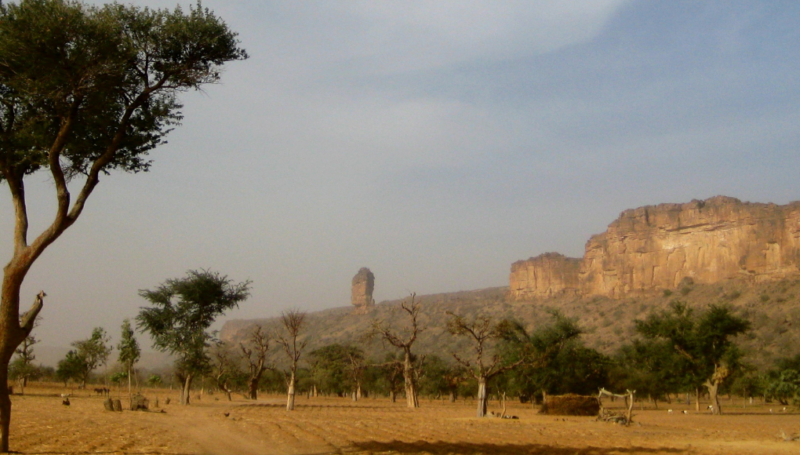
Mali | Perception des besoins et sentiment d’insécurité dans les communes de Bandiagara et Ménaka : Principaux résultats de la dernière évaluation
Le rapport récemment publié sur la perception des besoins et le sentiment d’insécurité à Bandiagara et Ménaka offre des informations essentielles sur les besoins des populations affectées, en particulier...

Mali | Risques sanitaires dans les régions de Ménaka et Kidal : Une situation alarmante
Une récente évaluation réalisée par REACH Initiative, une initiative d’IMPACT, met en lumière des défis sanitaires majeurs dans les régions de Ménaka et Kidal. L’accès limité aux infrastructures de santé...