

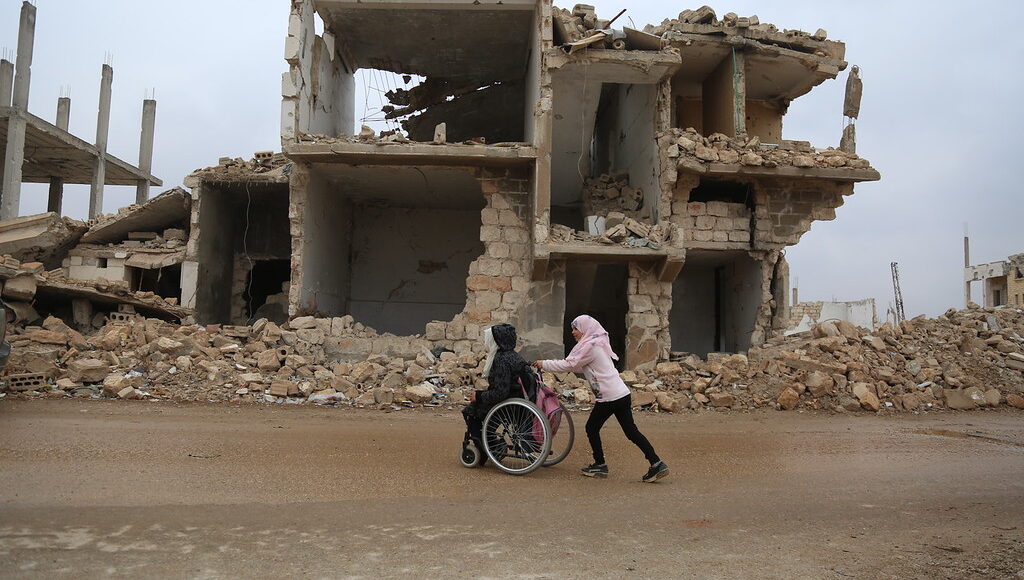

In humanitarian crises, people with disabilities are among the most affected, yet too often remain unseen. Faced with overlapping emergencies, they experience heightened risks of death, injury, abuse, and deprivation. A combination of pre-existing and crisis-related barriers, persistent discrimination, and stigma drives these risks.
For years, the lack of disability data kept these needs at the margins of humanitarian planning. While progress has been made in integrating disability-disaggregated data into humanitarian programme cycles, further efforts are still needed. With support from UNICEF and funding from the Government of Norway, IMPACT conducted a cross-crisis study to advance these efforts. Drawing on the Washington Group Short Set on Functioning (WG-SS), the study analysed 27 Multi-Sector Needs Assessment (MSNA) datasets from 17 countries collected between 2022 and 2024, measuring disability prevalence and severity alongside humanitarian needs, across and within crises.
What are the Washington Group Short Set of Questions and the Child Functioning Module?
The WG Short Set of Questions comprises six questions on functioning, designed, tested, and adopted by the Washington Group on Disability Statistics (WG). The WG questions were designed to provide comparable data cross-nationally for populations living in various cultures with differing economic resources. It focused on measuring difficulty functioning in six basic, universal actions (capabilities) that, in an unaccommodating environment, would place an individual at risk of restricted social participation.
Across nearly every studied context, households including members with disabilities faced more severe and complex needs than households without someone with disability.
In Lebanon in 2023, for example, almost half of all such households faced multisectoral gaps (44%), compared to just 17% of those without.
Across crisis, disparities were most pronounced in health, food security, and livelihoods, further compounding vulnerability and limiting access to life-saving services. Even after accounting for displacement, age, and location, households with members with disabilities were significantly more likely to face critical gaps. One key factor highlighted by the study in explaining the gap between the two populations is the difficulty people with disabilities face in accessing essential services, as well as humanitarian aid. This is partially due to communication not being adapted to their impairments and other access barriers to critical services.
For example, in Mozambique (2024), only 28.6% reported no challenges in accessing services. The majority cited difficulties with medical care (53.2%), followed by rehabilitation or physical therapy (8.6%), assistive devices and specialized equipment (8.1%), and non-food items (6.9%).
Two years of field implementation show that collecting accurate disability data requires indeed more than simply adding questions to a survey. It demands adequate tool selection, such as using the Child Functioning Module for children, tested translations in local languages, and awareness of under-reporting risks when the WG-SS is asked to proxy respondents.
What is the Child Functioning Module?
It was recommended that the WG-SS must not cover children under five since it often misses developmental disabilities in children. To address this, the Child Functioning Module was finalized in 2016, assessing functional difficulties across domains such as vision, hearing, mobility, communication, behavior, and learning (all ages); dexterity and play (ages 2–4); and self-care, memory, attention, coping, relationships, and emotions (ages 5–17).
Across contexts, these barriers are particularly acute for sub-groups such as host and migrant communities in Lebanon or people living outside camps in Ukraine. When disability intersects with other vulnerabilities, such as displacement status, affected people are likely to face compounded challenges in meeting their needs.
As humanitarian resources shrink in 2025, the IASC’s call to prioritise the most vulnerable is more urgent than ever. Without deliberate action, people with disabilities risk being left even further behind. Embedding disability-disaggregated data into every stage of the humanitarian programme cycle is essential, not only to ensure inclusion, but to deliver more relevant, equitable, and effective responses.
For more information on our cross-crisis study, please refer to the two following briefs highlighting key findings and lessons learned, as well as the detailed report.
Banner photo credit: UNOCHA/Ali Haji Suleiman (Syria)