


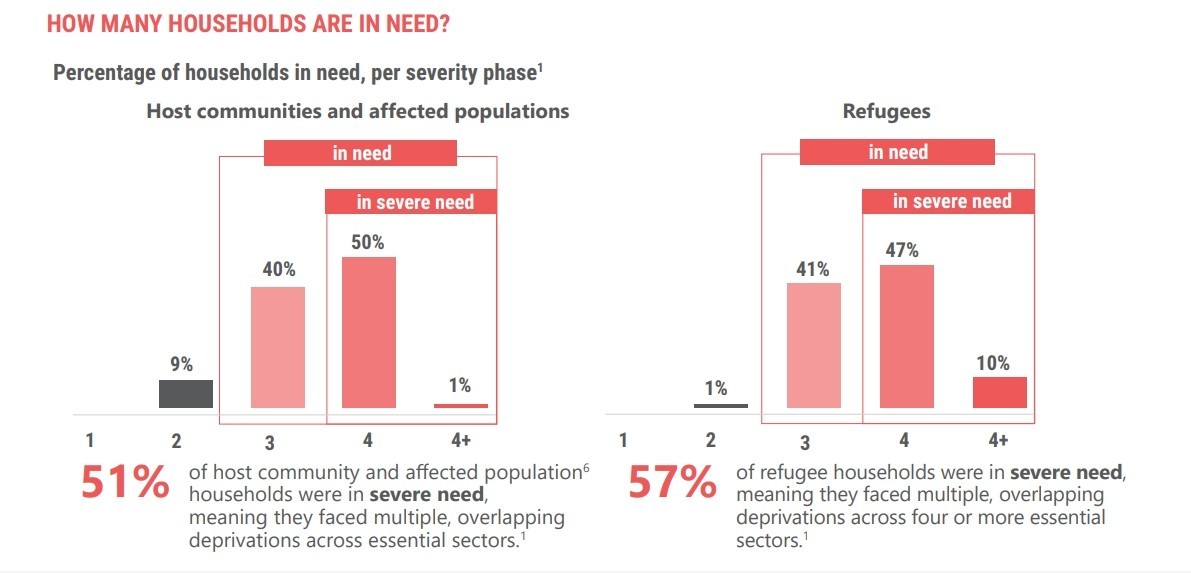
In Garissa, Mandera, Marsabit, and Turkana counties, 99% of refugee households and 91% of host and affected populations reported at least one unmet need. The share of refugee households facing severe needs (57%) has nearly doubled since 2024.
These insights come from the Multi-Sectoral Needs Index (MSNI), built on the Multi-Sector Needs Assessment (MSNA), a rigorous and comprehensive multi-sectoral needs assessment conducted by REACH in direct consultation with communities. By combining robust data collection with community engagement, the MSNI provides a detailed overview of humanitarian needs, highlighting which communities are most affected and where assistance is most urgent.
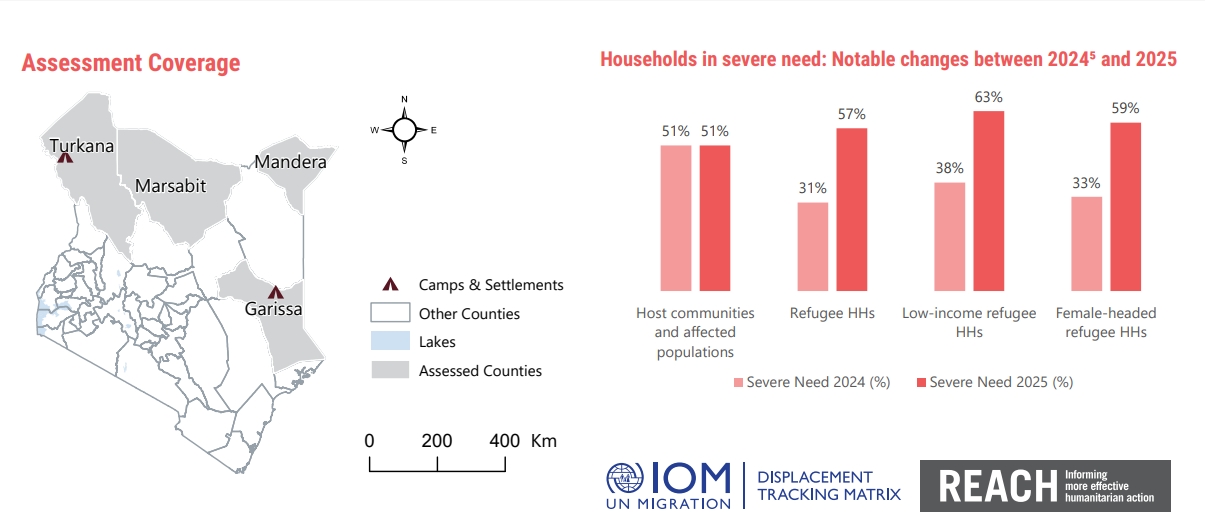
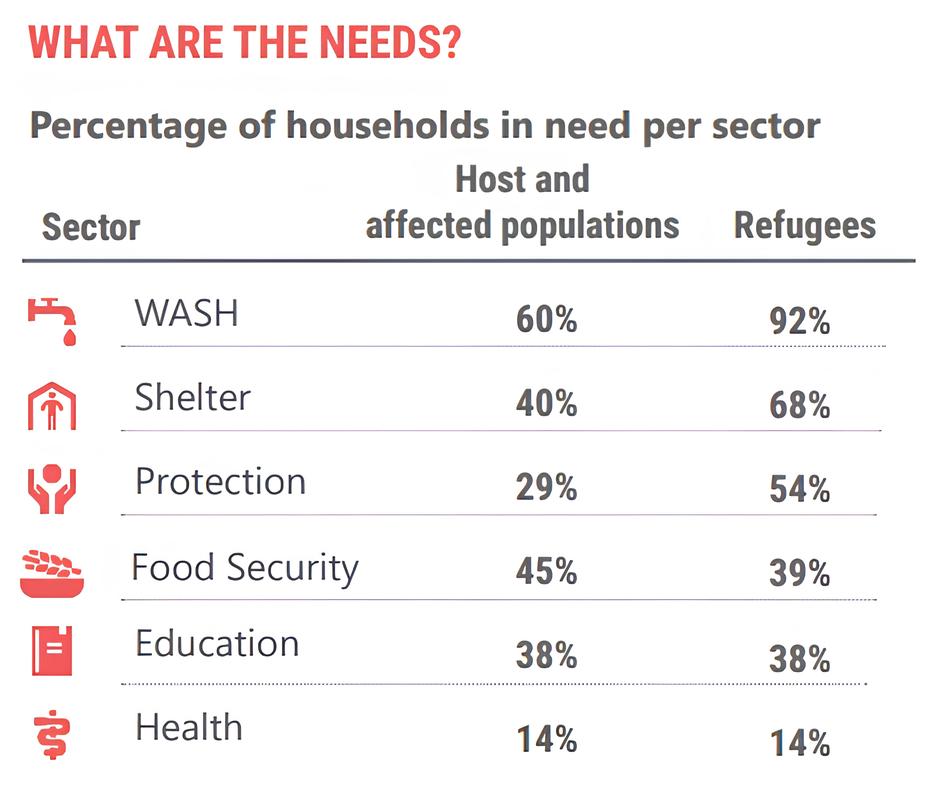 | Kenya MSNI indicates that WASH, shelter, protection, and food security remain the primary drivers of need across both refugee and host communities. Protection needs are notably higher among refugees (54%) compared to host and affected populations (29%), underscoring the heightened vulnerability of displaced households. Low-income and female-headed households consistently face the most severe needs, and their situation has deteriorated since 2024. Gender gaps are significantly wider among host and affected populations, where vulnerability is largely driven by household-level economic constraints. In contrast, camps benefit from structured and more evenly delivered humanitarian services, which help reduce disparities. |
Methodology
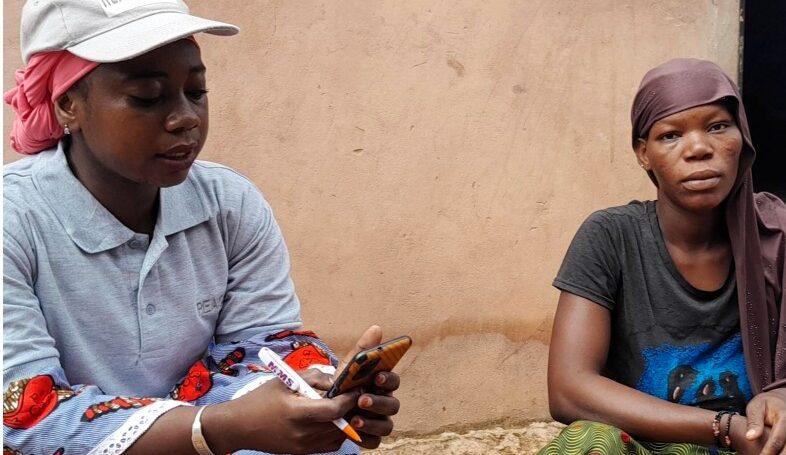
The 2025 Multi-Sector Needs Assessment (MSNA) used a quantitative, face-to-face household survey covering Garissa, Mandera, Marsabit, and Turkana counties, including refugee populations in Dadaab, Kakuma, and the Kalobeyei Integrated Settlement. Stratified simple random sampling was applied at a 95% confidence level and 10% margin of error, ensuring representativeness by county, sub-county, and population group.
A total of 3,765 households were surveyed (2,864 host and affected populations and 901 refugee), with sampling based on KNBS (2019) and UNHCR (April 2025) data. Data collection took place over two weeks in June 2025 using KOBO Collect, supported by trained enumerators and daily field supervision. For further details on the methodology, please find linked the ToR.
The MSNA was funded by ECHO and Sida.