


The situation in the Upper Nile, especially the counties of Renk, Nasir and Ulang, is extremely dire due to a combination of conflict and displacement – aggravated by funding cuts and difficult access.
An extreme public health crisis persists on the Sobat River-Corridor
One month after the Integrated Food Security Phase Classification (IPC) warned there was risk of famine in a plausible worst-case scenario in Nasir and Ulang counties, an emergency assessment1 reveals extreme levels of hunger and malnutrition in parts of both counties in July, despite a reduction in large-scale violence since May.
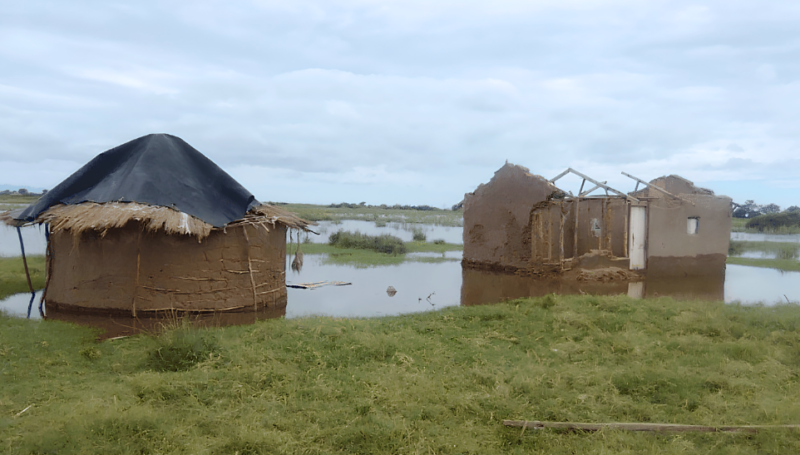
Key aggravating factors – including persistent violence, severe flooding, a decimated healthcare system and a seemingly intractable cholera outbreak – show few signs of easing during the rainy season, especially in Nasir. Sporadic violence continued to displace civilians between June and July, while restricting some communities to essential food and livelihood sources. Severe flooding could trigger new waves of displacement and drive extremely poor sanitation, especially in makeshift displacement sites on the Sobat River.
The humanitarian response in remote areas is crippled by persistent violence, stockouts and considerable access constraints, restricting households’ access to lifesaving healthcare and nutrition services.
Escalating humanitarian needs in Renk amid reduced mobility, operational challenges and environmental risks
In addition to internal violence, the Upper Nile region is also affected by the conflict in neighboring Sudan. Since the outbreak of conflict in April 2023, over 1 million people have crossed into South Sudan, with the vast majority entering through Renk County. Most were South Sudanese nationals returning after years of displacement, often arriving without financial or social support and experiencing severe food insecurity and malnutrition.
In June 2025, the Onward Transport Assistance was suspended due to funding cuts, which enabled displaced persons to move safely from entry points to their chosen destinations within South Sudan, where they can reunite with family, access basic services and begin to rebuild their lives. The suspension of this critical service, alongside a broader reduction in humanitarian services in Renk, paints a concerning picture of a growing population of increasingly vulnerable returnees – a trend expected to continue throughout the second half of 2025. As a Humanitarian Key Informant shares during our recent qualitative assessment:
“There will be many returnees stuck here. These will be the most vulnerable and poorest ones, those who cannot leave”.
The transit centre is now accommodating more than 300% of its intended capacity.
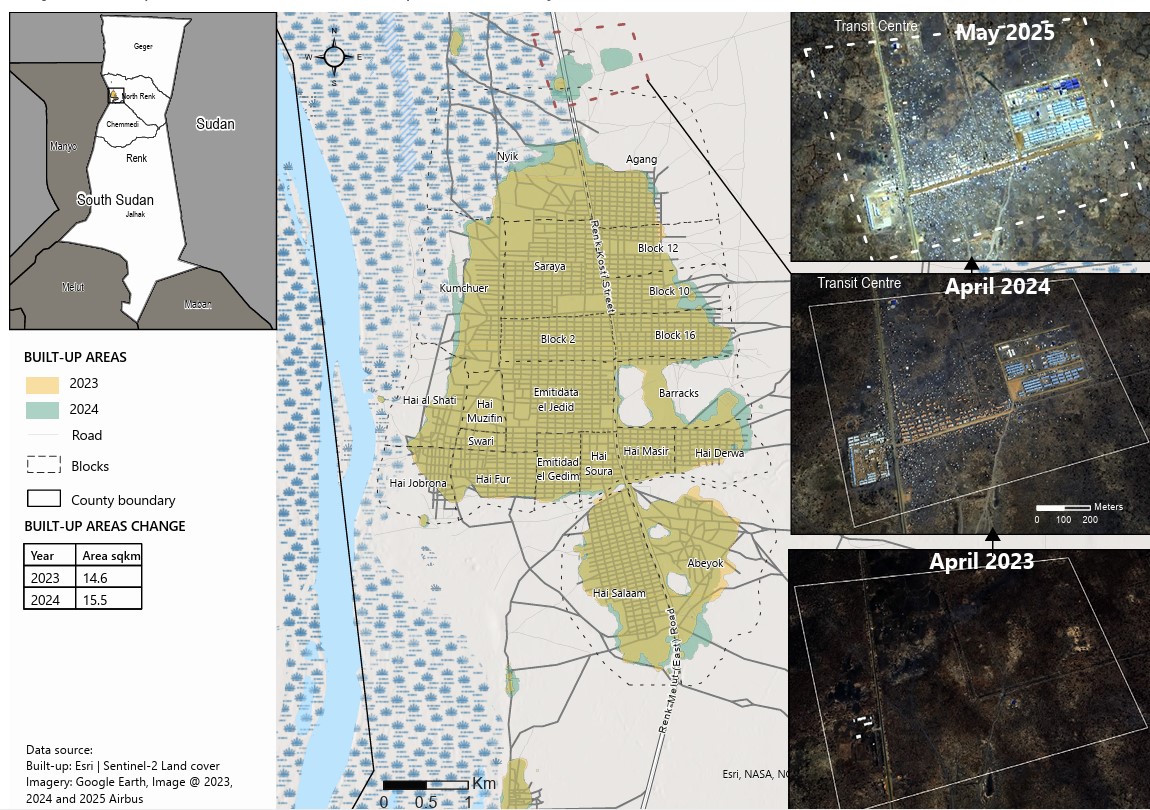
Map: Built-up areas in Renk town from April 2023 to May 2025
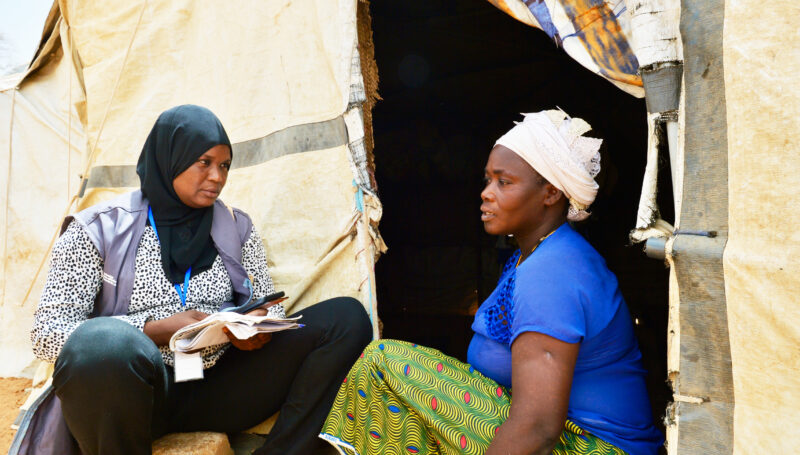
Findings indicate severe humanitarian conditions among returnees across various locations, with lack of access to food or the financial means to purchase it. Another unmet need is access to safe and adequate shelters, one returnee mentions:
“We have no shelters here in the camp. I was told: “if you want to have a shelter, come with your family”. It is devastating, as most of us came without families. Where will we stay? Especially now that we are approaching the rainy season. Because of this, I regret coming here. If I knew this, I would have just stayed in Sudan to die there”.
As in Nasir and Ulang, disease outbreaks are occurring against the backdrop of a limited healthcare system, with the cholera death rate doubled between June (0.4%) and July (0.9%).
There is a strong need for durable solutions and integration support, as many returnees are likely to remain in Renk long-term now that options for onward movement are limited.
Our assessments paint a concerning picture and an unfolding public health crisis in the Upper Nile Region. Active hostilities and continuous displacement, a heightened threat of severe flooding, and significant constraints on humanitarian access, the combination of disease and deepening hunger is deepening. The rainy season creates the risks of even more extreme health outcomes, including an increased risk of death from disease and starvation.
As of July 2025, the Humanitarian Response Plan (HRP) for South Sudan is funded at 21.9%. The lack of public awareness and international attention has rendered the crisis largely overlooked, despite its severity.
Read our full briefs to find out what this means, and what partners should monitor in the coming months:
Banner photo credit: ICRC Archives
1 REACH partnered with Relief International, Nile Hope, the Universal Network for Knowledge & Empowerment (UNKEA), the Health Foundation Organization (HFO), the Adventist Development and Relief Agency (ADRA), the Agency for Child Relief Aid (ACRA), Touch Africa Development Organization (TADO), World Vision and the Christian Mission for Development (CMD) in order to conduct this emergency assessment.